
Rapid Technological Evolution of Electric Truck Refrigeration Units: Cold Chain Logistics Enters a New Era of Green Intelligence
As the global push for carbon neutrality accelerates and demand for fresh food e-commerce and pharmaceutical cold chain logistics rises, electric truck refrigeration units are evolving from mere "accessories" of traditional fuel-powered trucks into a core competitive arena within the new energy commercial vehicle sector. Recent breakthroughs in intelligent control, high-efficiency compression technology, and eco-friendly refrigerants signal a period of rapid technological upgrading for this market segment.
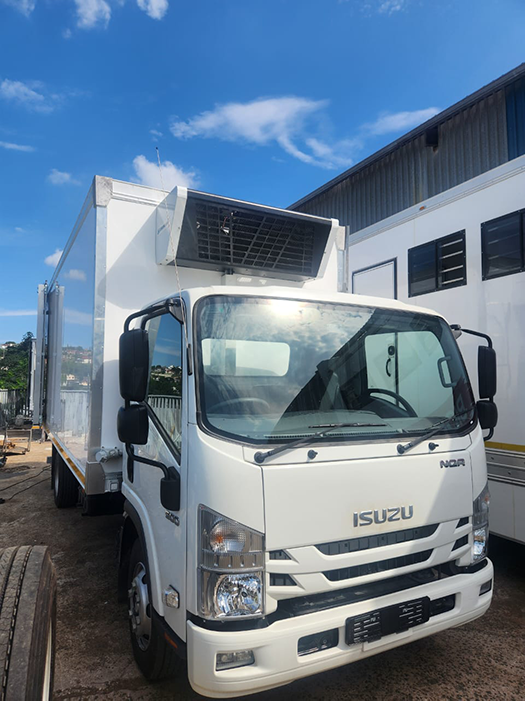
Intelligent Control Redefines Refrigeration Logic; AI Algorithms Enable Precision Energy Efficiency
Next-generation refrigeration units have moved beyond basic temperature regulation. Predictive maintenance systems powered by AI algorithms are now being deployed; these systems automatically optimize cooling output based on driving routes, cargo characteristics, and ambient temperatures, ensuring precise temperature control while significantly reducing energy consumption. Cloud-based remote monitoring and fault diagnosis have become standard features, allowing fleet managers to track the real-time status of each unit and address potential issues proactively, thereby achieving a qualitative leap in operational efficiency. Meanwhile, intelligent learning algorithms record common operating conditions to build optimal control models, synchronizing the refrigeration system with driving behavior and charging/discharging strategies to achieve dynamic, vehicle-specific adaptation.
High-Efficiency Compression Technology Breaks Barriers; Lightweight and Quiet Designs Become the Norm
High-efficiency compression technology is another focal point of recent innovation. Traditional scroll compressors are increasingly being replaced by ultra-high-speed centrifugal compressors. Leveraging oil-free bearings and ultra-high-speed motor designs, these new compressors are significantly smaller and lighter, while effectively suppressing vibration and operating noise. They also feature a wide speed-adjustment range, enabling them to meet the fluctuating cooling demands of electric trucks across diverse road conditions. Their oil-free structure extends maintenance intervals, substantially lowering the total cost of ownership. Furthermore, the wide-range efficiency of these new compressors ensures excellent performance even under low-load conditions—making them ideal for the frequent stop-and-go scenarios of urban delivery—and effectively alleviates range anxiety for all-electric vehicles.
Eco-friendly refrigerants and system integration are driving the creation of a green, low-carbon, closed-loop thermal management system.
The transition to eco-friendly refrigerants is accelerating rapidly. As international regulations regarding refrigerants with high Global Warming Potential (GWP) become increasingly stringent, the adoption of natural working fluids and low-GWP synthetic refrigerants is gaining momentum. Leading industry players are rolling out system designs optimized for these new refrigerants, further enhancing heat exchange efficiency while maintaining safety standards. Some advanced solutions have achieved significant reductions in refrigerant charge, mitigating environmental risks at the source and aligning electric truck refrigeration units more closely with the ultimate goals of green logistics. Meanwhile, system integration has become an irreversible trend; the three key thermal management components of electric trucks—traction battery systems, cabin air conditioning, and cargo refrigeration—are becoming deeply coupled. Through a centralized intelligent control hub and a shared refrigerant circulation loop, these systems enable integrated management of cabin comfort, cargo cooling, and battery temperature control. This approach not only lowers vehicle costs and assembly complexity but also eliminates energy losses caused by the interaction of independent systems.
From a policy perspective, many regions have mandated that new urban delivery vehicles be new energy models and have provided clear guidance and support for replacing existing internal combustion engine refrigerated trucks; this has undoubtedly created unprecedented opportunities for the application of electric truck refrigeration units. Looking ahead, refrigeration units will evolve from standalone hardware components into intelligent execution terminals integrated into the vehicle's central energy management system. With the widespread adoption of high-voltage platforms and continuous advancements in thermal management technology, an era of quieter, cleaner, more efficient, and smarter cold-chain transport is rapidly approaching—and every incremental breakthrough in refrigeration technology adds a solid foundation to this zero-carbon future.