
Electric Refrigeration Units for Box Trucks: A Green Engine for Urban Cold Chain Delivery
Against the backdrop of accelerating urban logistics transitioning to new energy, box trucks—workhorses for fresh e-commerce, food service supply chains, and pharmaceutical cold chain delivery—are seeing rapid growth in their配套 electric refrigeration units. Compared to traditional diesel-driven units, electric refrigeration units offer zero emissions, low noise, and high efficiency, making them an ideal choice for cold chain temperature control in urban delivery scenarios. Industry consensus holds that the deep integration of electric refrigeration units with new-energy box trucks is redefining the technical standards and operational models of urban cold chain delivery.
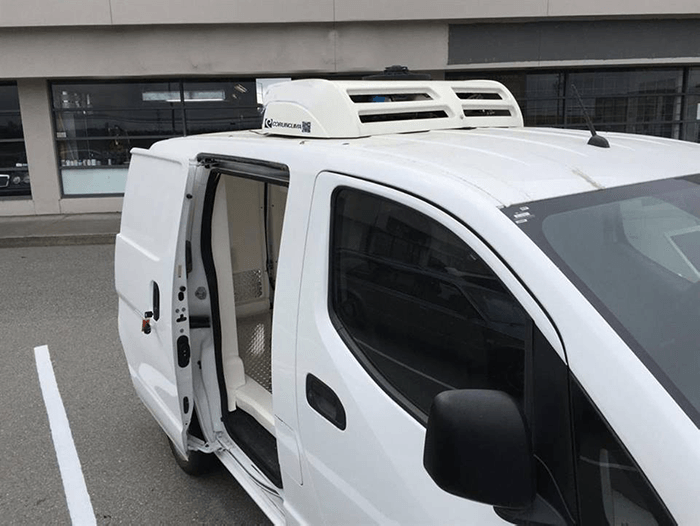
Deep Integration: From Simple Retrofitting to Vehicle Synergy
Early electric refrigeration units were often installed as standalone add‑ons to box trucks, with little coordination between the refrigeration system and the vehicle chassis or traction battery. However, as the concept of whole‑vehicle thermal management becomes widespread, a new generation of electric refrigeration units has achieved deep integration with the vehicle’s electronic and electrical architecture. The refrigeration compressor uses variable‑frequency or fully direct‑current drive technology, automatically adjusting cooling power based on interior temperature changes and door opening frequency—ensuring precise temperature control while effectively managing energy consumption. Intelligent temperature control systems can communicate in real time with the vehicle’s instrument panel and remote monitoring platforms, allowing drivers to set temperatures, diagnose faults, and switch operating modes from within the cab.
On the thermal management front, some advanced designs are exploring synergy between the refrigeration system and the battery thermal management system. For example, in low‑temperature winter conditions, waste heat generated by the refrigeration unit can be recovered to preheat the battery or warm the cab, achieving cascaded energy use across the vehicle. This integration not only alleviates range concerns for electric box trucks in cold seasons but also improves overall vehicle energy efficiency. In addition, low‑noise design has become a key technical指标 for electric refrigeration units. During nighttime urban deliveries or when parked for loading/unloading in residential areas, operating noise can be kept to a low level, significantly reducing disturbance to residents.
At the Urban Last Mile: Precisely Matched to Core Delivery Scenarios
The primary battlefield for electric refrigeration units on box trucks is intra‑city and suburban short‑haul delivery. In scenarios such as fresh e‑commerce front‑end warehouses, convenience store cold chain replenishment, central kitchen ingredient delivery, and temperature‑controlled transport for pharmacy chains, these units demonstrate unique advantages. Because delivery routes are relatively fixed and single‑trip distances moderate, electric refrigeration units can draw power directly from the vehicle’s traction battery, eliminating the need for an auxiliary engine or separate fuel tank—reducing vehicle weight and simplifying routine maintenance.
More critically, electric refrigeration units enable box trucks to enter areas with strict emissions and noise restrictions. Whether it is nighttime access to central business districts, pharmaceutical deliveries near hospitals, or food supply around schools, zero‑emission, low‑noise electric units have become a compliance requirement for market access. This scenario‑specific suitability is driving more and more urban logistics companies to specify electric refrigeration units as standard equipment when purchasing box trucks.
Industry Collaboration: Standardization and Customization Advancing in Parallel
As the market scale expands, collaboration across the electric refrigeration unit industrial chain is becoming tighter. Chassis manufacturers, refrigeration unit suppliers, and battery companies are jointly developing interface standards to ensure seamless integration of power supply, control, and vehicle architecture. At the same time, customized solutions for different weight classes, cargo box volumes, and temperature zones continue to emerge, achieving full‑spectrum coverage from micro vans to light‑duty box trucks.
On the operations and maintenance side, remote monitoring and predictive maintenance functions are gradually becoming standard features. Fleet managers can view each unit’s operating status, temperature curves, and energy consumption in real time via a cloud platform. The system automatically pushes anomaly alerts and service reminders, effectively reducing the risk of cargo loss due to refrigeration failure.
Current Challenges and Responses
Despite clear advantages, the widespread adoption of electric refrigeration units for box trucks still faces practical constraints. Under high ambient temperatures, prolonged full‑load operation of the refrigeration system can impact vehicle range, requiring coordinated energy management strategies between the vehicle and the unit. Furthermore, some older box trucks lack sufficient electrical circuit capacity to meet peak power demands of electric units, making retrofitting costs and safety assessments real challenges. Notably, industry stakeholders are gradually addressing these pain points by improving system efficiency, promoting solar‑assisted auxiliary power, and optimizing charging schedules.
Outlook
As the penetration of new‑energy light commercial vehicles continues to rise and urban environmental policies tighten, electric refrigeration units for box trucks are set to evolve from a differentiated selling point into a standard base component. They are not merely a temperature‑control tool for cold chain delivery but a key element of the urban green logistics system. A quieter, cleaner, more intelligent new era of urban cold chain is accelerating with every start‑up of these electric refrigeration units.