
Green Transition of Cold Chain Logistics Accelerates Further
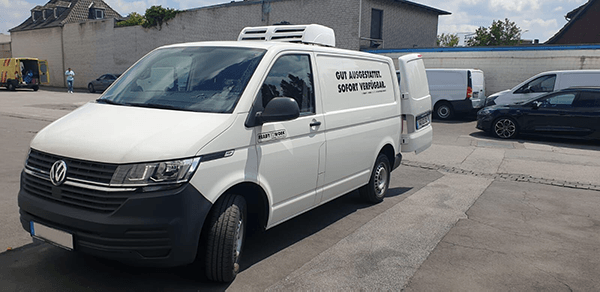
New Generation of High-Efficiency Electric Refrigeration Units for Box Trucks Achieves Technological Breakthrough
Driven by the continuous growth in demand for fresh food e-commerce and pharmaceutical cold chains—coupled with increasingly stringent requirements for green and low-carbon operations in urban distribution—new energy refrigerated vehicles are rapidly transitioning from a "policy-driven" model to a "market-driven" one. Recently, a significant development emerged within the domestic sector for temperature-controlled equipment: a new generation of refrigeration units, custom-engineered specifically for electric box trucks, has officially entered large-scale commercial application. Through systemic innovations in energy consumption optimization, temperature control precision, and vehicle-system synergy, this product offers a highly practical solution for the electrification upgrade of cold chain logistics.
Technological Breakthrough: From "Fuel-to-Electric Conversion" to "Deep Synergy"
For a long time, the temperature control aspect of "last-mile" refrigerated transport has been a critical focal point regarding both industry energy consumption and regulatory compliance. Traditional fuel-powered auxiliary units suffer from high energy consumption and face traffic restrictions; conversely, early-stage electric refrigerated vehicles—often created through retrofitting existing platforms—frequently suffered from poor compatibility between the refrigeration unit and the chassis battery pack. This mismatch led to unstable overall driving range performance and even created a dilemma where "driving mileage had to be sacrificed to maintain refrigeration." Consequently, the key to driving the comprehensive electrification of cold chain distribution lies in finding a way to truly integrate the refrigeration unit into the new energy vehicle's chassis system.
The newly launched generation of electric refrigeration units employs a full-DC variable-frequency architecture and intelligent thermal management technology. Its core innovation lies in achieving deep synergy between the refrigeration system and the vehicle's powertrain. Through an embedded intelligent control module, the unit can monitor the vehicle's driving status, remaining battery charge, and real-time cargo compartment load in real time. Based on this data, it dynamically adjusts its cooling output to maintain refrigeration energy consumption within an optimal range, all while ensuring uncompromising temperature control quality. Compared to the frequent start-stops and wasteful energy consumption typical of traditional fixed-frequency units, this technological approach delivers a significant improvement in energy efficiency, effectively alleviating user concerns that "installing a refrigeration unit limits driving range."
Performance Optimization: Adapting to Multi-Scenario Cold Chain Demands
In terms of temperature control performance, this unit has undergone specialized optimization to address the unique characteristics of cold chain logistics—specifically, the need to accommodate multiple temperature zones and diverse operational scenarios. Whether for the preservation and transport of fresh produce or the low-temperature distribution of frozen foods and pharmaceuticals, these refrigeration units deliver rapid response and stable temperature control. They demonstrate exceptional adaptability—particularly when transporting high-value cargo that is highly sensitive to temperature fluctuations. Furthermore, the units feature a lightweight, compact design; this not only reduces the vehicle's curb weight but also enhances compatibility with a wide range of new-energy commercial vehicle chassis. Covering everything from compact vans used for last-mile urban delivery to light, medium, and heavy-duty trucks for intercity transport, the units offer users a broad spectrum of flexible options.
Industry Value: Bridging a Critical Link in Green Distribution
From an industry application perspective, the widespread adoption of new-energy refrigerated vehicles involves more than just equipment upgrades; it is fundamentally linked to the operational efficiency of the entire cold chain. The mass deployment of this new generation of electric refrigeration units enables cold chain logistics enterprises to achieve a superior balance across key areas: urban traffic accessibility, energy cost management, and fleet carbon emission control. This is particularly significant given the increasingly stringent restrictions on fuel-powered trucks operating within core urban zones, a context in which electric refrigerated vehicles—with their highly efficient cooling capabilities—are rapidly becoming the preferred choice for numerous distribution companies.
Future Outlook: Cold Chain Electrification Enters a New Phase
Industry experts point out that the deep integration of refrigeration units with new-energy vehicle chassis represents a pivotal direction in the technological evolution of cold chain equipment. The traditional retrofit model—which merely converts fuel-powered vehicles to electric drive—is now being supplanted by systematic, customized, and OEM-grade integrated solutions. As core temperature-control technologies continue to mature, the comprehensive advantages of new-energy refrigerated vehicles—spanning driving range, temperature-control reliability, and total lifecycle costs—will become even more pronounced.
It is foreseeable that, driven by the dual forces of "Dual Carbon" goals and the pursuit of high-quality development in cold chain logistics, highly efficient and energy-saving electric refrigeration units for commercial vans and trucks will see accelerated adoption. This will provide robust technical support for the construction of a modern cold chain logistics system that is green, efficient, and resilient—ensuring an unbroken supply chain. As more enterprises increase their R&D and investment in this sector, the electrification of cold chain logistics is poised to enter a new, higher-quality phase of development.