
Electric Truck Chillers Form the Core of Thermal Management; Industry Races to Secure Technological Leadership
As the global commercial vehicle sector accelerates its transition to new energy, the thermal management of power batteries in electric trucks has become a critical factor influencing overall vehicle performance and safety. Serving as the "heart" of the thermal management system, chillers designed specifically for electric trucks are attracting sustained attention across the supply chain. Major suppliers and vehicle manufacturers are ramping up R&D investment to drive rapid technological evolution in this field. Unlike traditional heavy-duty trucks powered by internal combustion engines, electric trucks generate significant heat during charging and discharging. Under extreme operating conditions—such as climbing steep gradients with heavy loads or rapid charging—battery temperatures rise much faster than in conventional vehicles, placing rigorous demands on the chiller's cooling capacity, response speed, and reliability. The industry widely regards high-performance chillers as a core enabling technology for electric heavy-duty trucks to effectively replace diesel counterparts.
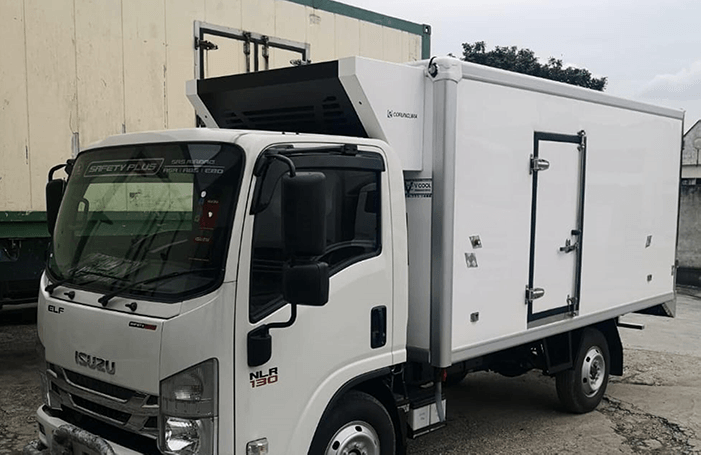
Technological Innovation: Advancing Variable-Frequency Control and Eco-Friendliness
Electric truck chillers are currently evolving toward higher integration, intelligent variable-frequency control, and lower noise levels. Traditional fixed-speed compressors are increasingly being replaced by variable-frequency scroll or centrifugal solutions. These modern systems dynamically adjust cooling output based on real-time battery temperatures, ensuring precise thermal control while significantly reducing energy consumption—thereby helping to alleviate "range anxiety." Simultaneously, the landscape of refrigerants is undergoing a profound shift; new, eco-friendly refrigerants with low Global Warming Potential (GWP) are rapidly entering the market to meet increasingly stringent global environmental regulations. Regarding system architecture, a growing number of thermal management solutions deeply integrate chillers with heat pump air conditioning and motor waste heat recovery, creating an intelligent, closed-loop thermal management system for the entire vehicle. This integrated design not only addresses battery cooling needs but also enables heating in cold climates by reversing compressor operation—warming the cabin or preheating the battery. This reduces reliance on high-voltage electric heaters and further enhances overall vehicle energy efficiency. Industry experts note that the transition from "simple cooling" to "intelligent thermal regulation across the full temperature range" marks a significant milestone in the maturation of electric truck thermal management technology.
Deep Integration Across the Value Chain: From Component Supply to System Synergy
Regarding industrial positioning, numerous traditional automotive air-conditioning suppliers have designated electric truck chiller units as a strategic business segment, establishing dedicated production lines and expanding laboratory validation capabilities. Simultaneously, major power battery manufacturers are extending their reach upstream into thermal management components; by deeply integrating cell chemistry with cooling channel designs, they aim to deliver integrated "battery pack plus chiller" solutions, thereby enhancing system compatibility and overall competitiveness. Furthermore, startups specializing in high-speed oil-free bearing technology and novel micro-channel heat exchanger technology are attracting capital investment, marking the initial formation of a collaborative innovation landscape across the value chain. In the mid-stream sector, system integrators are focusing on developing standardized chiller modules to enable vehicle manufacturers to rapidly adapt to electric trucks of varying tonnages and applications. Downstream end-users are increasingly prioritizing the stability and cooling efficiency of thermal management systems, treating these factors as key criteria when selecting vehicles. This top-to-bottom, value-chain-wide coordination is reshaping the industrial ecosystem for commercial vehicle thermal management.
Convergence of Demand and Policy: A Window for Certain Growth
From a market perspective, demand for electric trucks is surging first in specific scenarios such as cold-chain logistics, short-haul mining transport, and port drayage operations; these high-frequency, heavy-load applications impose rigorous requirements regarding chiller unit durability and fault-tolerant design. End-users have moved beyond focusing solely on battery capacity and drive motor power, now prioritizing the thermal management system's ability to maintain stable cooling during prolonged, high-intensity operations. This shift in demand is compelling vehicle manufacturers to highlight chiller unit performance as a core selling point. Meanwhile, timelines for the adoption of zero-emission commercial vehicles in major global markets are becoming increasingly clear. Governments in various regions are introducing stricter requirements for the electrification of cooling systems in niche categories like refrigerated trucks; this mandates that not only the powertrain but also the auxiliary cooling system must move away from reliance on diesel engine power take-off (PTO) in favor of all-electric chiller units. Such strong regulatory drivers are creating a landscape of highly certain growth for electric truck chiller units. Looking ahead, as high-voltage fast-charging platforms become increasingly widespread in the commercial vehicle sector, the thermal load on batteries during peak charging will rise exponentially. This poses a new challenge for the peak cooling capacity and instantaneous response speed of chiller units. It is widely acknowledged within the industry that intelligent chillers capable of adapting to all operating conditions will become standard equipment for next-generation electric trucks; their technological sophistication will be a decisive factor in determining success amidst fierce market competition. Clearly, the technological race surrounding electric truck chillers is only just beginning, and the ultimate beneficiary will be the entire green logistics ecosystem.