News
-
02-26 2026
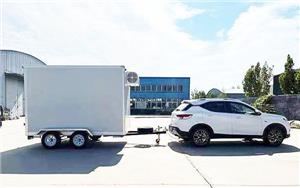
Mobile Chiller Trailer: A New Standard in Portable Cold Chain Solutions
World-class enterprises are built on world-class products. In the mobile refrigeration industry, quality is not merely a feature—it is the foundation of reliability, safety, and long-term value. Manufacturers that prioritize rigorous testing, durable materials, and energy-efficient design help customers reduce operational risks and costs.
-
02-25 2026
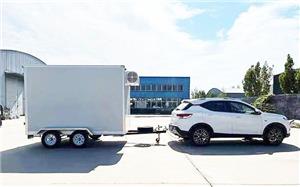
Mobile Cold Chain: Portable Refrigerated Trailers Become a New Favorite in the Supply Chain
With the booming development of global food trade, increasingly stringent pharmaceutical cold chain standards, and the continued growth in emergency logistics demand, a flexible and efficient solution—portable refrigerated trailers—is emerging from the background, becoming an indispensable key player in the modern logistics system. This type of equipment not only redefines the concept of "mobile cold storage" but also brings revolutionary changes to the transportation and storage of temperature-sensitive goods with its user-friendly design and green energy philosophy.
-
02-11 2026
Mobile Chiller Trailer Solutions Drive Next-Generation Flexible Cold Storage
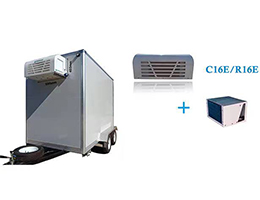
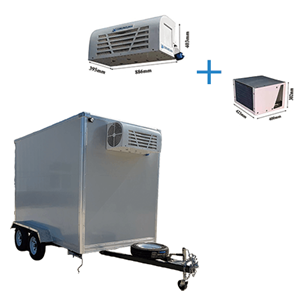
A key highlight of Corunclima’s portfolio is the C16E and R16E models, which offer 1600 W of cooling capacity for trailers up to approximately 12 m³, capable of producing stable chilled temperatures down to -5 °C and deep-freezing conditions to around -20 °C respectively. Larger units like the C24E/R24E extend this capability up to 2500 W for volumes of up to 25 m³, making them suitable for larger event storage or commercial food transport.
-
11-20 2025
Mobile Refrigeration Trailors: Guardians of the Modern Cold Chain
In today's precisely functioning societal landscape, there exists an invisible yet vital "lifeline"—the cold chain. It safeguards the quality and safety of everything from the fresh ingredients on our tables to life-saving vaccines in pharmacies. However, this lifeline is not always unbreakable. Sudden failures of fixed cold storage facilities, warehouse overload during peak production seasons, and urgent demands from major events can all challenge the constant low-temperature environment.