
The Revolution of Portable Refrigerated Containers: Redrawing the Boundaries of Logistics
In the world of logistics and transportation, a seemingly simple invention is quietly changing the way the industry operates. Portable refrigerated trailers – a system composed of standard-sized containers, refrigeration units, and mobile bases – are penetrating the furthest reaches of the logistics system in a unique way. Their emergence is not just a technological improvement, but a redefinition of traditional transportation concepts.
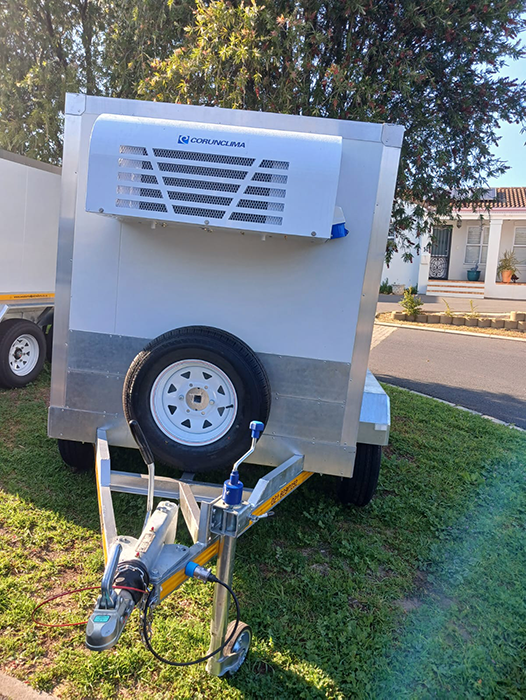
Crossing Fixed Boundaries
Traditional cold chain transportation has always faced a structural challenge: how to establish an effective connection between fixed facilities and mobile needs. Large cold storage facilities and standard refrigerated trucks form the key nodes of the network, but the coverage of these nodes is always limited. When transportation needs arise in the gaps between these nodes, the entire system falls into difficulty.
The emergence of portable refrigerated containers breaks this deadlock. They no longer need to rely on fixed refrigeration facilities, but instead integrate refrigeration capabilities into the mobile unit itself. This shift allows cold chain services to break free from the constraints of infrastructure, truly enabling "on-demand supply." Goods no longer need to be transported to a refrigeration point – the refrigeration point can actively come to the goods.
Behind this mobility is a revolution in power systems. Early refrigeration equipment relied on on-board engines or external power sources, limiting their independent operation capabilities. Modern portable refrigerated containers are equipped with high-density battery packs and intelligent energy management systems, enabling them to operate continuously for tens of hours without external power, making long-distance transportation and temporary storage possible.
Redefining Transportation Units
Traditionally, the smallest unit of transportation is a "full truckload." Even if a customer only needs to transport a small amount of goods, they must rent an entire refrigerated truck, resulting in wasted resources. Portable refrigeration systems change this fundamental logic, reducing the transportation unit to the "single container" level.
This transformation brings about a fundamental shift in operating models. Logistics companies can allocate the number of refrigerated containers according to actual needs, rather than simply dispatching vehicles. During off-peak seasons, idle refrigerated containers can be stacked and stored, significantly reducing maintenance costs; during peak seasons, multiple refrigerated containers can be combined to flexibly respond to fluctuations in demand.
Standardized container design further facilitates this trend. Uniform external dimensions and internal structures allow refrigerated containers from different manufacturers to work seamlessly together and be quickly transferred between different modes of transport. A refrigerated container unloaded from a shipping vessel can be directly loaded onto a truck for land transport. Upon arrival at the distribution center, it can be transferred to smaller vans for last-mile delivery, eliminating the need for reloading the goods at any point in the process.
Creating Dynamic Temperature Environments
Temperature control has always been a core challenge in cold chain logistics. Traditional refrigerated trucks often only provide a single, uniform temperature environment, while actual transportation often requires simultaneously transporting goods with different temperature requirements. Portable refrigerated containers solve this problem through independent temperature control systems.
Each refrigerated container can be set with specific temperature parameters based on the characteristics of the goods it carries. Meat requiring -18℃ freezing and dairy products requiring 2-8℃ refrigeration can be placed in different containers and then transported together. This "multi-temperature co-transport" model greatly improves transportation efficiency and reduces logistics costs.
The introduction of intelligent temperature control systems further enhances the precision of temperature management. A sensor network monitors temperature changes at various points inside the container in real time, and the control system automatically adjusts the cooling intensity based on environmental conditions and cargo characteristics. If the system detects that the container door is frequently opened or the external temperature rises sharply, it will immediately activate emergency cooling mode to ensure the internal temperature remains stable within the set range.
Empowering Last-Mile Delivery Networks
The efficiency of logistics systems is often limited by bottlenecks in the last-mile delivery. In narrow streets where large refrigerated trucks cannot pass, in the backyards of retail stores lacking unloading platforms, and in small warehouses without cold chain facilities, traditional transportation methods are often ineffective. Portable refrigerated containers, with their flexibility and adaptability, are injecting new vitality into these last-mile logistics segments.
Small delivery vehicles can tow one or more refrigerated containers, reaching areas inaccessible to traditional large vehicles. Community supermarkets, restaurants, and small clinics can directly receive goods in ideal preservation conditions without investing in expensive refrigeration facilities. This "door-to-door" cold chain service reduces operating costs for retailers and improves product quality.
In the agricultural product distribution sector, the role of portable refrigerated containers is particularly significant. Previously, farmers needed to build temporary cold storage facilities in the fields or immediately transport products to centralized cold storage. Now, they can directly load harvested agricultural products into mobile refrigerated containers, complete pre-cooling treatment in the field, and then flexibly arrange transportation time according to market demand. This model not only reduces product loss but also strengthens farmers' bargaining power in market negotiations.
Data-Driven Transparent Transportation
Modern portable refrigerated containers are no longer just transport containers, but also data collection and transmission nodes. Built-in IoT devices continuously record key parameters such as temperature, humidity, location, and vibration, and upload them to a cloud platform in real time via a wireless network.
This end-to-end data monitoring creates unprecedented transparency. Recipients can view the transportation status of goods in real time through a mobile application, confirming that they are always kept in a suitable storage environment. If a temperature anomaly or transportation delay occurs, the system will automatically issue an alert and provide a detailed anomaly report. This transparency not only improves cargo safety but also simplifies the dispute resolution process.
Data analysis further optimizes transportation decisions. The accumulation of historical transportation data allows logistics companies to identify high-risk routes, inefficient transportation periods, and equipment failure patterns. Through machine learning algorithms, the system can predict temperature change trends on specific routes, adjust cooling strategies in advance, and achieve preventative temperature control.
Modular Logistics for the Future
As logistics demands continue to evolve, portable refrigeration systems are developing towards a more modular and intelligent direction. Future refrigerated containers may be equipped with replaceable functional modules, allowing for quick adjustments to internal configurations based on the needs of different goods.
Automatic identification technology will more closely integrate cargo management and temperature control. When a refrigerated container is loaded with pharmaceuticals, the system will automatically activate the pharmaceutical transportation mode, recording a complete temperature history and generating compliance reports; when loaded with fresh food, it will switch to the food transportation mode, focusing on maintaining freshness indicators.
Innovations in energy systems will further enhance the autonomy of refrigerated containers. The combination of solar-assisted power supply, fast charging technology, and high-efficiency batteries will allow refrigerated containers to be virtually independent of fixed charging facilities, achieving truly all-day independent operation.