
The Portable Refrigerated Trailer Market Heats Up
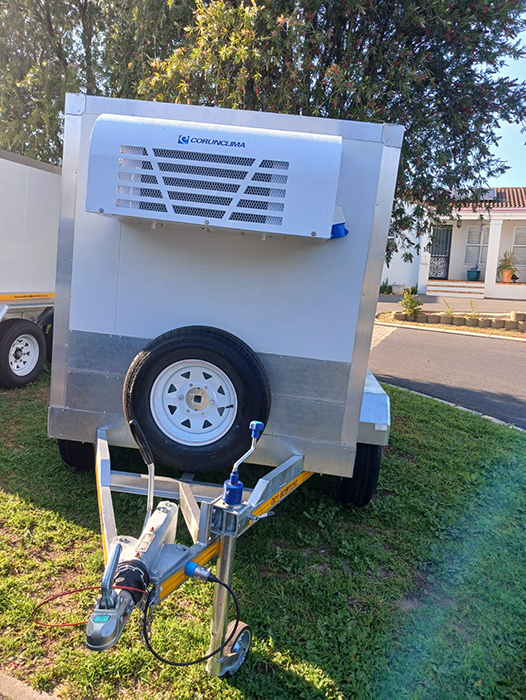
"Mobile Cold Storage" Solves Last-Mile Cold Chain Challenges
As e-commerce for fresh produce, the pre-prepared meal industry, and the outdoor camping economy continue to boom, a type of portable refrigerated trailer—dubbed "mobile cold storage"—is gradually expanding beyond the specialized logistics sector into a wider array of commercial applications. Thanks to their flexible deployment and "plug-and-play" capabilities, these units are effectively resolving the temperature-control challenges inherent in the "last mile" of cold chain logistics, establishing themselves as a critical link connecting production sites to end consumers.
Flexible Deployment: Filling Gaps in Traditional Cold Chains
In traditional cold chain ecosystems, fixed-site cold storage facilities and large refrigerated trucks have long held a dominant position. However, when faced with diverse scenarios—such as temporary events, community-level deliveries, supply logistics for remote regions, and mobile food stalls—traditional equipment often presents pain points such as high integration costs and inflexible scheduling. The emergence of portable refrigerated trailers has effectively filled this market gap. Typically comprising an insulated cargo compartment and an independent refrigeration unit, these devices utilize high-strength composite materials for the compartment—balancing lightweight design with superior thermal insulation—while the refrigeration system allows for precise, multi-zone temperature control ranging from deep freezing to standard refrigeration. Users need only connect the unit to a power source via a standard trailer hitch to quickly deploy a fully functional mobile cold storage facility.
Green Transition: New Energy Technologies Gain Traction
From a technological evolution standpoint, new energy power sources are emerging as a key driver of innovation within this industry. Driven by increasingly stringent environmental regulations and traffic restrictions in urban low-emission zones, traditional diesel-powered refrigeration units are facing operational constraints. Leading industry players are accelerating their transition toward electrification, utilizing on-board battery packs to power their refrigeration systems. Furthermore, some products now integrate regenerative braking and solar-assisted charging technologies; this not only reduces carbon emissions but also significantly lowers operational noise levels, making these units far more suitable for noise-sensitive environments such as residential areas, hospitals, and schools.
Smart Cold Chains: IoT Enables Precision Management
Concurrently, the deep integration of intelligent technologies is reshaping the landscape of cold chain management. Modern portable refrigerated trailers are now routinely equipped with IoT monitoring systems capable of transmitting real-time data on internal temperature, humidity, and the operational status of the refrigeration unit. Operators can remotely monitor the storage and transport environment of goods via mobile devices or computers, receiving immediate alerts the moment any anomalies occur. This form of visualized temperature-control management not only reduces cargo spoilage rates but also provides a higher level of traceability assurance for food safety and pharmaceutical transport.
Diverse Scenarios: From Outdoor Events to Community Supply
In terms of application scenarios, the scope of portable refrigerated trailers is constantly expanding. These units can now be found supporting everything from large-scale outdoor music festivals, sporting events, and temporary vaccination sites to community group-buying distribution hubs—and even providing catering support for high-end outdoor weddings. Their flexibility is further demonstrated by their multi-temperature zone design; through optimized internal compartment structures, a single trailer can simultaneously accommodate the mixed transport of both frozen foods and refrigerated produce, thereby significantly enhancing the economic efficiency and productivity of each delivery run.
Emerging Markets: A New Catalyst for County-Level Commerce
Market observers note that as consumer expectations regarding the quality of fresh produce rise—and as cold chain regulatory standards become increasingly stringent—portable refrigeration equipment capable of flexible deployment is poised to enjoy significantly broader growth prospects. Particularly against the backdrop of developing county-level commercial ecosystems and the rapid expansion of rural e-commerce, such equipment is expected to play an increasingly pivotal role in processes such as pre-cooling produce at the source and serving as logistics transit hubs in rural towns and villages.
The Path to Standardization: Operational Upgrades Alongside Standardized Products
From the perspective of the industry's long-term trajectory, product standardization and operational formalization will be the key priorities moving forward. Currently, equipment quality across the market remains uneven, with some products still having room for improvement regarding thermal insulation performance and refrigeration stability. As relevant technical standards and environmental regulations are progressively refined, specialized manufacturers possessing independent R&D capabilities and systems integration expertise will gain a distinct competitive edge.
From Supporting Role to Center Stage: New Trends in Cold Chain Logistics
It is foreseeable that, driven by the dual forces of consumption upgrades and the transition toward a green economy, the niche sector of portable refrigerated trailers is shifting from a "supporting role" to a "center stage" position within the cold chain logistics landscape. These units serve not merely as physical vessels extending the reach of temperature-controlled supply chains, but also reflect a deeper industry-wide trend toward greater flexibility, intelligence, and low-carbon operations. For end consumers, this translates into a more reliable delivery experience for fresh, safe food and pharmaceuticals—whether they are situated in urban neighborhoods or enjoying the great outdoors at a campsite.