
Truck Parking Air Conditioner: Driving the Shift Toward an Idling-Free Future in Long-Haul Transport
As global logistics demand continues to rise, the comfort and well-being of long-haul truck drivers—especially during rest periods in high-temperature environments—has become a growing concern. In markets such as the United States, strict anti-idling regulations and rising fuel costs are accelerating the transition away from traditional engine-powered air conditioning. In this context, the truck parking air conditioner is emerging as a key solution reshaping the industry.
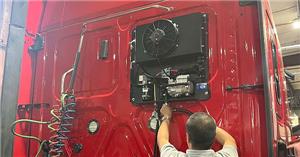
1. Industry Pain Points: The Hidden Costs of Idling
For decades, truck drivers have relied on engine idling to power air conditioning while parked. However, this approach comes with significant drawbacks:
Excessive fuel consumption: Idling can burn approximately 0.8–1.2 gallons of fuel per hour
Increased engine wear: Continuous operation shortens engine lifespan
Regulatory pressure: Many U.S. states enforce strict anti-idling laws
Noise and discomfort: Engine vibration and noise reduce rest quality
These issues are especially problematic during summer months, when cooling demand is at its peak.
2. Technological Breakthrough: The Rise of Electric APU Systems
To address these challenges, Electric Auxiliary Power Units (Electric APUs) have gained rapid traction. These systems power air conditioning using onboard batteries, allowing cooling even when the engine is turned off.
A leading example is Corunclima’s Electric APU solution, which reflects the latest advancements in truck parking air conditioner technology:
High cooling capacity: Up to 15,000 BTU for rapid temperature reduction
True no-idle operation: Eliminates the need for engine use during rest
Zero emissions: Supports compliance with EPA and CARB regulations
Ultra-quiet performance: Enhances driver comfort and sleep quality
Long service life: Designed for durability exceeding 10 years
This combination of performance and sustainability positions electric APUs as more than just an alternative—they are quickly becoming the preferred solution.
3. Economic Impact: Turning Cost into Competitive Advantage
Beyond comfort, truck parking air conditioners offer substantial financial benefits:
Fuel savings exceeding 1,500 gallons per year
Reduced maintenance costs due to less engine usage
Fast ROI: Investment can be recovered within 9–10 months
As fuel prices fluctuate and environmental policies tighten, these systems provide a strategic advantage for fleet operators seeking cost efficiency and regulatory compliance.
4. Application Scenarios: Essential for Modern Trucking
Truck parking air conditioners are particularly valuable in:
Hot climate regions such as the southern United States and Mexico
Long-haul and cross-state transportation routes
Areas with strict anti-idling enforcement
Heavy-duty trucks, including brands like Kenworth, Freightliner, and Volvo
In these scenarios, Electric APUs not only improve driver well-being but also ensure operational compliance.
5. Future Outlook: Electrification and Smart Integration
Looking ahead, the evolution of truck parking air conditioner technology is expected to follow three major trends:
Full electrification: Replacing diesel APUs and traditional systems
Higher efficiency: Greater cooling output with lower energy consumption
Smart integration: Connectivity with fleet management systems for real-time monitoring and optimization
As the transportation industry moves toward sustainability, these innovations will play a central role in shaping greener logistics.