
Battery-Powered Refrigeration Units: A Quiet Yet Profound Industrial Transformation
When people discuss the energy transition, the spotlight often falls on speeding new-energy vehicles or towering energy storage power stations. However, beneath the undercurrents of this profound transformation, a seemingly traditional sector—refrigeration—is undergoing a technological renaissance driven by battery power. Battery-powered refrigeration units—a product category that had long remained dormant within niche markets—are now stepping onto the center stage of the industry with an entirely new technological profile.
Technological Awakening: From Dependency to Autonomy
In conventional thinking, refrigeration equipment is inextricably linked to the power grid. Whether for home air conditioners or commercial freezers, operation via a mains power connection has long been regarded as the natural order of things. The advent of battery-powered refrigeration units, however, shatters this century-old technological paradigm. By deeply integrating energy storage units with refrigeration systems, these devices have gained an unprecedented degree of "operational freedom."
Underlying this freedom is a profound technological restructuring. Early battery-powered refrigeration units were little more than simple assemblies of storage batteries and DC compressors—inefficient and of questionable reliability. Today, however, the new generation of units has undergone a complete metamorphosis. The widespread adoption of DC variable-frequency technology allows compressor speeds to be adjusted in real-time based on thermal load, thereby eliminating the energy waste associated with frequent start-stop cycles. Furthermore, the introduction of intelligent control systems has taught these units to be "frugal"—automatically optimizing refrigeration strategies based on remaining battery charge to maximize runtime while ensuring that core cooling requirements are met.
Of particular note is the integrated application of heat pump technology. Traditional concepts view cooling and heating as two distinct systems; however, new battery-powered units—through the ingenious design of four-way reversing valves—have successfully unified these cooling and heating functions. This technological architecture enables the equipment to operate with high efficiency across different seasons and scenarios, significantly boosting overall annual energy efficiency.
Industrial Metamorphosis: Deep Penetration into Diverse Scenarios
The maturation of battery-powered refrigeration technology is giving rise to a range of application scenarios that were previously unimaginable.
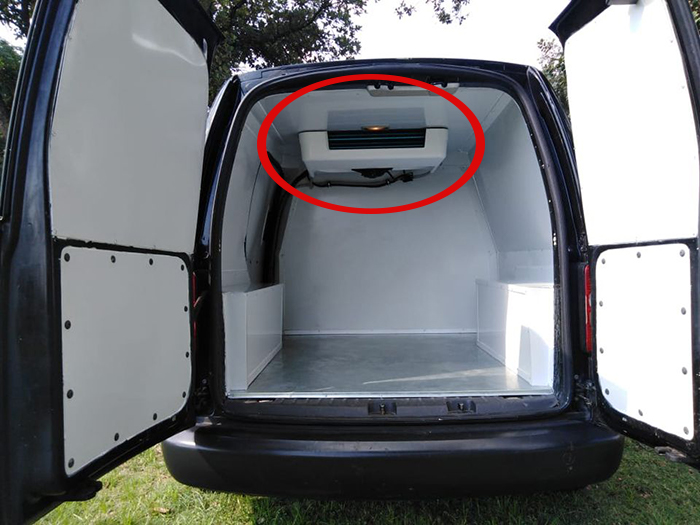
The mobile cold chain sector stands as the most direct beneficiary. Traditional refrigerated trucks typically rely on the vehicle's engine to drive the compressor—a method that not only consumes significant energy and generates excessive noise but, more critically, results in the complete cessation of cooling whenever the vehicle is parked. For urban cold chain logistics—which require frequent stops for deliveries—this scenario typically entails repeated fluctuations in cargo compartment temperatures, posing a significant threat to the quality of fresh produce. Battery-powered independent refrigeration units have completely revolutionized this landscape; even when the vehicle’s engine is switched off, the refrigeration system continues to operate seamlessly on its internal battery power, thereby ensuring a truly unbroken cold chain from start to finish.
In the retail sector—specifically within supermarkets and grocery stores—a new type of mobile refrigerated display cabinet is quietly gaining traction. Equipped with onboard energy storage batteries, these refrigeration units are liberated from the constraints of fixed power outlets, allowing their placement to be adjusted dynamically based on customer traffic flow. At night, they utilize off-peak electricity rates to charge their batteries and build up a reserve of cooling capacity; during the day, they rely on this stored energy to maintain temperature stability. This approach not only enhances operational flexibility but also helps "peak-shave" and "valley-fill" electricity consumption, thereby optimizing energy costs.
The medical cold chain represents another sector being fundamentally reshaped by technology. Historically, the transportation of temperature-sensitive medical supplies—such as vaccines and biological agents—has relied heavily on dry ice or passive ice packs, resulting in imprecise temperature control and a lack of traceability. The advent of battery-powered, active refrigeration containers offers a far more reliable solution for the medical cold chain. Precise electronic temperature control, real-time data transmission, and extended off-grid operational capabilities ensure that the journey of every single vaccine dose is transparent, controllable, and fully traceable.
Fusion and Symbiosis: The Two-Way Convergence of Energy and Refrigeration
The rise of battery-powered refrigeration units carries a deeper significance: it marks the beginning of a profound integration between energy systems and refrigeration systems.
The transition from unidirectional energy consumption to bidirectional interaction lies at the very core of this integration. Tens of thousands of battery-powered refrigeration units are collectively forming a substantial, distributed energy storage network. These devices function simultaneously as producers of cooling capacity and as repositories of electrical energy. When the power grid faces excessive load, these units can actively reduce their power draw—or even temporarily shut down—to free up precious electricity for more critical demands. Conversely, when there is a surplus of renewable energy generation, they can ramp up their cooling output to store thermal energy, thereby helping the grid stabilize fluctuations and balance supply with demand.
This bidirectional interaction is fundamentally redefining the role of refrigeration equipment. It is no longer merely a passive energy-consuming unit at the periphery of the power grid, but rather evolves into a flexible, dynamic resource capable of providing regulatory services within the broader energy ecosystem. Against the backdrop of deepening reforms within electricity markets, this newfound regulatory capability holds the potential to translate into tangible economic benefits, thereby unlocking new avenues of value creation for the users of this equipment. Concurrently, continuous advancements in battery technology provide the foundational support for this convergence. Improvements in the safety and cycle life of lithium iron phosphate (LFP) batteries ensure the long-term operational reliability of refrigeration equipment. Furthermore, as next-generation technologies—such as solid-state batteries—reach maturity, the resulting leap in energy density will further expand the application frontiers of battery-powered refrigeration systems.
A Silent Revolution
Unlike those dramatic technological upheavals, the evolution of battery-powered refrigeration units resembles a silent, gradual permeation. It features no flashy aesthetic transformations, nor is it packaged in disruptive conceptual rhetoric; yet, in every corner where a cold chain is required, it is quietly rewriting the rules of the game.
In the fields, solar-powered battery refrigeration units enable fruits and vegetables to enter a pre-cooling state immediately after harvest, thereby drastically reducing post-harvest losses. In remote regions, autonomous vaccine refrigerators stand guard over the health of children. On urban street corners, silent-running new-energy refrigerated trucks traverse the night, delivering fresh ingredients to dinner tables for the day ahead.
These subtle changes, occurring in the minutiae of daily life, converge to form a powerful current driving the transformation of how society functions. The true value of battery-powered refrigeration technology lies not in the creation of an entirely new industry, but in breathing new vitality into an age-old one. This revolution—deep yet understated—is, in its own unique way, reshaping the relationship between humanity and temperature, while redefining the boundaries between energy and the cold chain.