
Truck Electric Air Conditioning: A "Zero-Carbon Revolution" in the Cab
Amidst the sweeping electrification transformation of the commercial vehicle industry, a previously overlooked corner is undergoing profound change—truck air conditioning and transportation refrigeration systems. While the industry spotlight largely focuses on the power density of drive motors and battery range, a "quiet revolution" concerning the working environment of millions of truck drivers and the future of cold chain logistics is unfolding both inside and outside the cab.
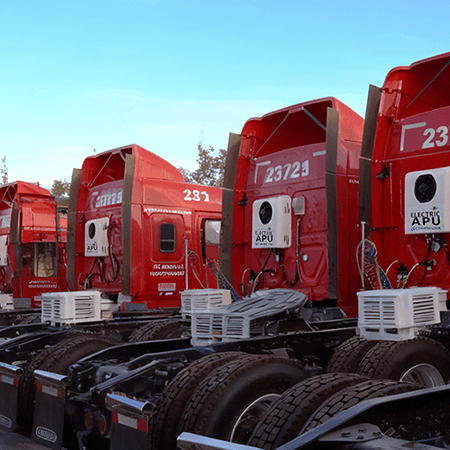
Saying Goodbye to the Engine: A Declaration of Independence for Air Conditioning Systems
Traditional truck air conditioning systems, whether for cooling the cab or refrigerating the cargo compartment, almost entirely rely on engine operation. The compressor is connected to the engine crankshaft via a belt, and once the vehicle is turned off, the air conditioning stops working. This design logic has been completely overturned in the era of electrification.
Today's electric truck air conditioning systems have independent electric drive architectures. They no longer require engine power, but instead draw power directly from the vehicle's battery pack or are equipped with independent battery modules. This means that even when parked for rest, loading and unloading cargo, or even idling in traffic jams, the air conditioning system can still operate at full capacity, providing a continuously stable and comfortable temperature in the cab.
More noteworthy is the technological innovation. Traditional scroll compressors are being replaced by more advanced centrifugal compressors. These new compressors are driven by ultra-high-speed motors, operating at speeds far exceeding traditional models, yet with significantly reduced size and weight. They employ a unique oil-free design, eliminating the maintenance hassles associated with traditional air conditioning systems due to lubricating oil circulation, achieving truly long-term maintenance-free operation.
In terms of quietness, electric air conditioning demonstrates a decisive advantage. Without the roar of the engine, the precisely tuned high-speed compressor significantly reduces operating noise, creating a rare quiet space for long-haul truck drivers. This is of paramount importance for improving the working environment of truck drivers and alleviating driving fatigue.
The Logic Behind Comfort: From "Enjoyment" to "Essential Need"
In the past, truck air conditioning was often considered a comfort feature, but with increasingly frequent extreme weather, it is becoming a rigid requirement for ensuring driver health and even driving safety.
In the hot summer, the air conditioning effect of traditional trucks is often greatly reduced on delivery routes with frequent starts and stops. The cab, exposed to the scorching sun, resembles a greenhouse, and the air conditioning stops working when the engine shuts down, leaving the driver in a prolonged high-temperature environment. This not only affects work performance but can also lead to safety risks such as heatstroke and decreased concentration.
The advent of electric air conditioning has completely solved this problem. The powerful battery reserves ensure the cab remains cool for extended periods, regardless of the vehicle's operating status. For cold chain transportation, the value of electrification is even more direct. The refrigeration unit, independent of the power system, ensures a constant temperature inside the container during long stops such as loading/unloading and waiting for customs clearance, which is crucial for ensuring the quality of high-value goods such as pharmaceuticals and fresh produce.
Meanwhile, the intelligence level of electric air conditioning systems is also improving. It is no longer a simple cooling and heating device but has become an important component of the vehicle's thermal management system. The system can automatically adjust its operating mode based on multiple factors such as the temperature difference between the cab and the outside, solar radiation intensity, and battery temperature. In winter, efficient heat pump technology can absorb heat from the ambient air to heat the cab, with energy consumption far lower than traditional electric heating methods.
Green Cold Chain: Driven by Both Regulations and Demand
Behind the rapid development of electric truck air conditioning lies increasingly stringent environmental regulations globally and the market's urgent need for green logistics.
Traditional diesel-powered refrigeration units generate emissions during operation, contradicting the goal of overall vehicle electrification. More and more regions and cities are imposing zero-emission requirements on freight vehicles entering urban areas, directly driving the electrification transformation of refrigerated transport equipment. Zero-emission electric refrigeration units not only eliminate exhaust pollution but also avoid the potential pollution risk to goods from diesel leaks.
From a broader perspective, the electrification of truck air conditioning is a key step in improving overall vehicle energy efficiency. Integrating the air conditioning system into the vehicle's high-voltage architecture, enabling compatibility with higher voltage platforms, not only improves energy utilization efficiency but also lays the foundation for future two-way interaction with smart grids.
With the popularization of heat pump technology and the iteration of refrigerants towards more environmentally friendly options, truck air conditioning systems are achieving low-carbon operation throughout their entire lifecycle. Refrigerants with low global warming potential are gradually replacing traditional working fluids, reducing environmental impact at its source.