
The Time is Right for Widespread Adoption of Electric Truck A/C: Ushering in an Era of "Cool and Quiet" Rest Stops
During long-haul freight journeys, the stifling heat inside the cab during rest stops has long been a source of misery for countless truck drivers. Traditional fuel-powered air conditioning systems require the engine to idle in order to operate—a practice that not only incurs high fuel costs and exceeds emission limits but also subjects drivers to the roar of the engine, severely compromising their sleep quality. However, with the maturation and widespread promotion of electric air conditioning technology for trucks, this situation is undergoing a fundamental transformation.
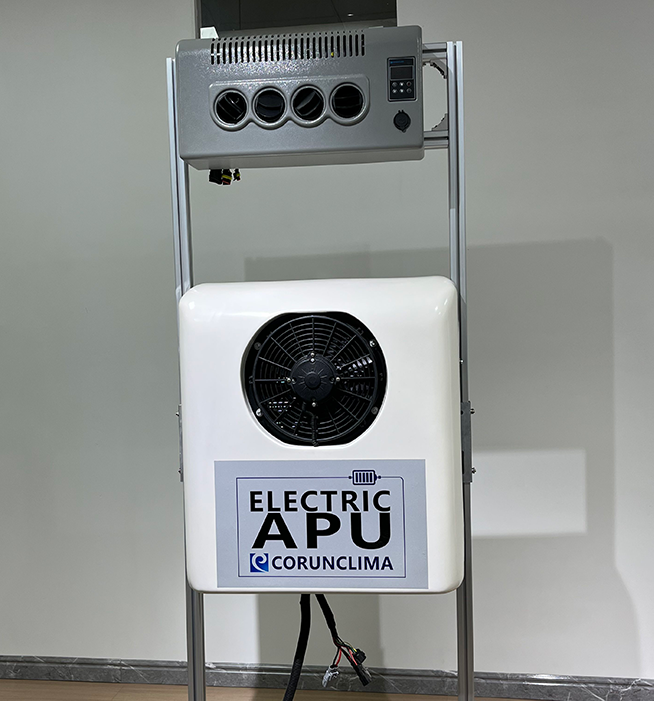
From "Burning Fuel" to "Using Electricity": An Economical Revolution in Rest Stops
Electric truck air conditioning systems utilize an independent electric drive mechanism, powered by the vehicle's onboard battery or an auxiliary power source, allowing them to function normally even when the engine is switched off. Compared to traditional solutions, their greatest advantage lies in significantly reducing the operating costs of cab cooling during rest periods; the cost of electricity is far lower than that of idling fuel consumption, and the systems eliminate the issues of engine wear and carbon buildup caused by prolonged idling. For truck owners who spend their lives on the road, the economic rationale is crystal clear. Furthermore, with the absence of engine noise, the cab becomes remarkably quiet, enabling drivers to enjoy truly restful sleep. This allows them to embark on the next leg of their journey in peak condition—a factor that plays an indirect yet crucial role in enhancing road safety.
Continuous Technological Evolution: Smarter, More Energy-Efficient, and More Durable
Early iterations of electric truck air conditioning systems suffered from issues such as low energy efficiency and limited cooling duration. Today, however, the industry's technological trajectory has undergone a qualitative leap. Mainstream products now widely employ variable-frequency control technology, which automatically adjusts power output based on the temperature difference between the interior and exterior of the cab, thereby maximizing energy conservation while ensuring optimal comfort. The efficiency of core components—such as compressors and motors—continues to improve, resulting in significantly enhanced overall system longevity and reliability. Some advanced models even integrate intelligent management systems that automatically monitor battery levels, issuing warnings or actively reducing power consumption when the charge runs low to prevent the awkward predicament of being unable to restart the vehicle. Remote control functionality is also gradually becoming a standard feature, allowing drivers to switch on the air conditioning in advance—via a mobile app—while dining or supervising cargo loading and unloading, ensuring a cool and comfortable cabin awaits them the moment they step back inside.
The Synergy of Policy and Market Forces: From "Optional" to "Standard Equipment"
Against the backdrop of mounting environmental pressures, regulations regarding engine idling for diesel trucks during rest stops are becoming increasingly stringent across various regions. Certain cities and transportation hubs have explicitly prohibited prolonged vehicle idling, thereby creating a compelling demand for the widespread adoption of electric air conditioning systems. At the national level, a series of guiding policies have been introduced—focused on the green and low-carbon development of the automotive sector as well as energy efficiency standards for parking air conditioners—to encourage transport enterprises and individual vehicle owners to adopt more energy-efficient and cleaner climate control solutions for parked vehicles. Concurrently, an increasing number of truck drivers are actively opting for electric air conditioning; having learned of the product's practical benefits through peer recommendations and online forums, they are spontaneously undertaking retrofits or selecting these systems as factory-installed options when purchasing new vehicles. This organic, market-driven demand is emerging as the most powerful force propelling the industry forward.
The Aftermarket and OEMs Advance in Tandem: Service Support Becomes Increasingly Robust
In the past, electric air conditioning for trucks was primarily regarded as an "aftermarket retrofit component," characterized by inconsistent installation quality and a lack of reliable after-sales support. Today, however, a growing number of mainstream truck manufacturers (OEMs) are pre-installing dedicated interfaces for electric air conditioning in their new models—and in some cases, even offering these systems as factory-installed options. This shift signifies that electric air conditioning is transitioning from a "grassroots accessory" to a "vehicle-level standard feature," achieving substantial qualitative improvements in terms of safety, system integration, and after-sales assurance. The aftermarket sector is also experiencing a boom, with a proliferation of vehicle-specific kits tailored to various truck brands and models; installation procedures are becoming increasingly streamlined, and professional service networks are expanding rapidly. Advancements in battery technology—particularly the widespread adoption of "deep-cycle" batteries designed for frequent charge-discharge cycles—have significantly extended the operating duration of parking air conditioners, thereby completely alleviating users' "range anxiety" regarding power consumption.
A Promising Future: Upgrading from a "Cooling Tool" to the "Core of the Intelligent Cabin"
Looking ahead, electric air conditioning for trucks will evolve beyond being merely a device for cooling or heating; it is poised to become a core component of the "intelligent cabin" within commercial vehicles. Through deep integration with vehicle-to-cloud connectivity systems, driver fatigue monitoring sensors, air quality sensors, and other technologies, the air conditioning system will be able to automatically adjust temperature, humidity, airflow speed, and ventilation modes based on the driver's rest status and the external environment—thereby infusing long-haul transportation with a greater sense of human-centric care. Furthermore, the gradual adoption of heat pump technology will enable electric air conditioning systems to deliver highly efficient heating during the winter months. This innovation will fundamentally resolve the long-standing issue of "excessive power consumption during electric parking heating," ultimately ensuring a comfortable cabin environment—warm in winter and cool in summer—that is truly suitable for year-round use. From a refreshing breeze amidst the sweltering heat to a touch of warmth during the biting cold of winter, electric air conditioning for trucks is quietly transforming the professional experience of millions of freight transport professionals. When technological progress truly serves fundamental human needs, logistics—the "major artery" of the national economy—will pulse with greater ease and a deeper sense of humanity. It is foreseeable that, driven by a multitude of advantages—including energy efficiency, environmental friendliness, comfort, and cost-effectiveness—the adoption rate of electric truck air conditioning will continue to climb, becoming a standard feature in the next generation of commercial vehicles.