
The Silent Revolution in Truck Air Conditioning: From Auxiliary Equipment to the Core of a Smart Ecosystem
In recent years, the trucking industry has been undergoing a silent revolution driven by improvements in the driver's cab environment. Air conditioning systems, once considered auxiliary equipment, have now become a key indicator of truck manufacturing quality and human-centered design, gradually evolving into the core of a mobile space ecosystem integrating intelligent control, health management, and energy allocation.
Technological Path: From Power Dependence to Independent Intelligent Systems
Early truck air conditioning systems relied entirely on the vehicle's main engine, and their lack of functionality when the vehicle was parked significantly hampered driver rest quality and transportation efficiency. The primary breakthrough in technological innovation was the decoupling of the air conditioning system from the vehicle's driving power.
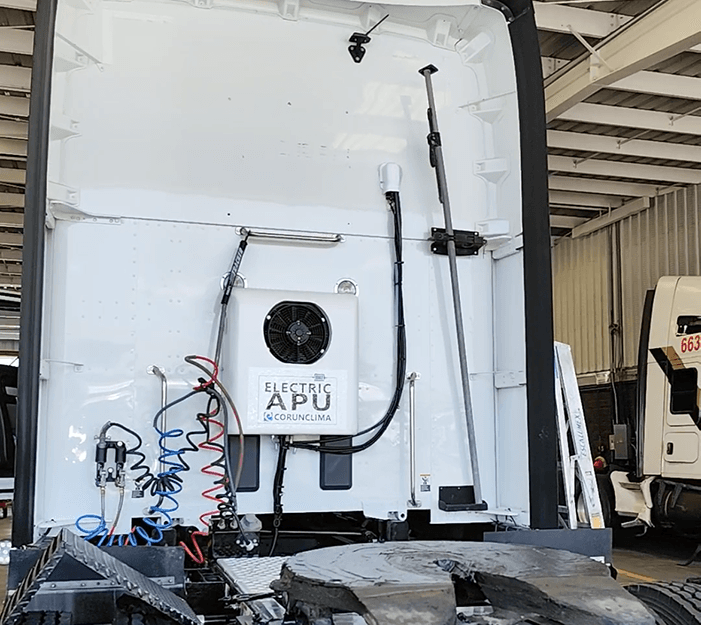
The widespread adoption of new-generation independent parking air conditioning systems marks the completion of this transformation. These systems, powered by dedicated battery packs or auxiliary power units, can continuously provide temperature control even after the engine is switched off. A more profound change has occurred at the control logic level; intelligent remote control has become standard, allowing drivers to preset environmental parameters via mobile devices, achieving a leap from "passive adaptation" to "active planning" in the user experience.
Functional Content: From Temperature Regulation to Healthy Environment Management
The functional scope of current truck air conditioning systems is rapidly expanding, and their core task has gone beyond basic temperature regulation. Air quality management systems are receiving increasing attention, with high-efficiency filtration modules effectively purifying incoming air to cope with diverse road environment challenges.
The refined design of airflow modes reflects advancements in ergonomics, avoiding health risks caused by direct strong airflow. At the same time, comprehensive in-cab environment monitoring is becoming a new trend, with integrated sensors monitoring and intelligently adjusting temperature, humidity, and air circulation in real time to create a stable microclimate within the cab. Significant progress in noise control technology has reduced system operating noise to extremely low levels, ensuring the driver's rest quality.
Industry Standards: From Peripheral Configuration to Core Safety Component
As industry understanding deepens, the positive impact of an excellent cab environment on driving safety has become a consensus. This has driven the shift of related configurations from "added value" features that enhance comfort to "standard features" that are crucial for transportation safety.
Policies and industry standards are gradually incorporating cab environment parameters into the overall vehicle evaluation system. Manufacturers' product development logic has changed accordingly, with air conditioning systems receiving higher priority in the vehicle design phase, resulting in deeper integration and more optimized spatial layout. Market consumer preferences have evolved in parallel, with drivers paying significantly more attention to the performance of environmental control systems when purchasing vehicles, directly impacting the market competitiveness of different models.
Supply Chain Collaboration: From Single-Point Breakthroughs to Systemic Innovation
Technological advancements in truck air conditioning are not isolated events; they have triggered a collaborative evolution across the entire supply chain. Upstream component manufacturers have engaged in intensive innovation surrounding high-efficiency compressors, low-power fans, and intelligent controllers.
The vehicle manufacturing sector has seen the emergence of more flexible electrical architecture designs, providing ample energy support for independent temperature control systems. Downstream service networks have also upgraded accordingly, with maintenance and repair systems undergoing professional modifications to accommodate the characteristics of the new systems. More importantly, the energy management function of the air conditioning system is beginning to integrate with the vehicle's powertrain, especially the three-electric system of new energy trucks, participating in the overall vehicle energy consumption optimization strategy.
Future Vision: From Closed Units to Open Ecosystem Nodes
Forward-looking industry trends indicate that truck air conditioning systems are developing towards deep interconnection and ecological integration. As one of the few continuously energy-consuming units in the cab, its future role may expand to become a key node in vehicle energy management, playing a role in smart grid interaction or fleet energy allocation.
With the maturation of autonomous driving technology, air conditioning systems will be more deeply integrated into the vehicle's intelligent control network, achieving fully autonomous environmental control based on information such as trip planning and driver status monitoring. It may also become an important interface for vehicle networking data, collecting and reporting environmental data to serve broader transportation and logistics management platforms.
This transformation, triggered by improvements in the cab environment, has significance far beyond product upgrades. It signifies a systemic shift in the value focus of the truck manufacturing industry, moving from single-minded transportation efficiency to a comprehensive dimension encompassing driver well-being, operational efficiency, and industry sustainability. A quieter, healthier, and smarter mobile workspace has become an indispensable component of the modernization process of China's road freight transportation.