
The Silent Era of Cold Chain Logistics: How Electric Refrigerated Trailers are Reshaping the Landscape of Logistics
A key link in cold chain transportation is undergoing a silent revolution—a shift from traditional diesel-powered systems to all-electric systems. This transformation not only reduces noise and emissions but also profoundly restructures the operational model and industry ecosystem of cold chain logistics.
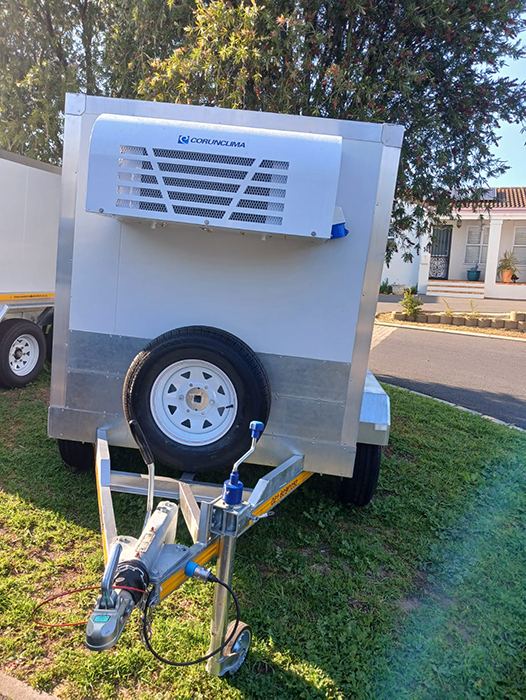
The Diverse Evolution of New Energy Technologies
Energy recovery systems have become one of the core technologies of electric refrigerated trailers. By capturing the kinetic energy generated during braking and converting it into electrical energy stored in the vehicle's battery, this design significantly extends the continuous operating time of the refrigeration system and reduces dependence on external charging facilities.
Hybrid energy solutions are also maturing. Some manufacturers are experimenting with integrating solar panels into the trailer roof, combined with high-efficiency battery packs, to create relatively self-sufficient energy systems. This type of design is particularly suitable for use in areas with ample sunlight or in scenarios involving long-term outdoor parking.
The development of intelligent temperature control systems is also noteworthy. Electric refrigerated trailers, through advanced IoT technology, achieve precise control and real-time monitoring of cargo compartment temperature, ensuring the safety of temperature-sensitive goods such as fresh produce and medical supplies throughout the transportation process.
Expanding and Deepening Application Scenarios
Urban nighttime delivery is one of the earliest application areas for electric refrigerated trailers. Their quiet operation allows logistics companies to operate at night in residential areas without disturbing residents, improving delivery efficiency and scheduling flexibility. This advantage is particularly evident in densely populated metropolitan areas.
Specific area transportation has also become an important application direction for electric refrigerated trailers. In noise- and emission-sensitive areas such as around schools, hospitals, and nature reserves, traditional diesel refrigerated trucks are often restricted, while electric models can travel smoothly, expanding the coverage of cold chain services.
Simultaneous multi-temperature zone transportation has become more feasible due to the refined control of electric systems. A single trailer can be divided into different temperature zones, simultaneously transporting frozen, refrigerated, and ambient temperature goods, improving vehicle utilization efficiency and reducing operating costs for logistics companies.
Gradually Increasing Market Acceptance
The balance between initial investment and long-term returns is being resolved. Although the purchase cost of electric refrigerated trailers is still higher than that of traditional models, this gap is gradually narrowing with technological advancements and large-scale production. More importantly, the price advantage of electricity over diesel makes electric vehicles significantly more economical in long-term operation.
Ease of maintenance is also a competitive advantage for electric refrigerated trailers. The relatively simple structure of electric systems with fewer parts reduces the probability of failure and maintenance needs, improving vehicle uptime and reliability, which translates to higher operational efficiency for logistics companies.
Changes in the policy environment have also driven increased market acceptance. More and more cities are restricting high-emission vehicles from entering urban areas, and environmental standards are becoming increasingly stringent, creating a favorable market environment and development space for electric refrigerated trailers.
Supporting infrastructure and industry collaboration:
The construction of charging networks is accelerating. Key nodes such as logistics parks, distribution centers, and highway service areas are beginning to add dedicated charging facilities for commercial vehicles, resolving the "range anxiety" of electric refrigerated trailers and creating the foundation for their large-scale application.
Standardization is also progressing steadily. The industry is reaching a consensus on interface standards, communication protocols, and safety specifications. The compatibility between electric refrigerated trailers from different manufacturers and charging facilities is continuously improving, providing users with more choices and convenience.
Cross-industry collaboration has become a significant trend in the industry. Closer cooperation among vehicle manufacturers, energy companies, logistics firms, and technology providers is driving the maturity of electric refrigerated trailer technology and the improvement of the ecosystem, accelerating the transformation and upgrading of the entire industry.
Future Development Trends: Continuous improvement in the level of intelligence will be a crucial direction for the development of electric refrigerated trailers. By integrating more sensors and data analysis functions, future refrigerated trailers will not only control temperature but also monitor cargo status, predict maintenance needs, and optimize energy efficiency, becoming truly intelligent logistics nodes.
Lightweight design is also receiving considerable attention. While ensuring structural strength and functional integrity, using new materials and optimized design to reduce vehicle weight can increase effective load capacity or extend driving range, further improving the economy and practicality of electric refrigerated trailers.
Energy diversification may become the next stage of development focus. In addition to pure battery power, different technological routes such as hydrogen fuel cells and hybrid power are being explored, providing more diversified solutions for different application scenarios and customer needs.