
Saying Goodbye to the "Roaring Era": The Silent Revolution in Urban Delivery
When a pure electric van slowly drives into the streets, it carries not only goods but also a profound transformation in urban delivery methods. The most significant change is in sound – the continuous roar of the internal combustion engine-driven refrigeration unit is replaced by a nearly silent operation. The source of this "silent revolution" lies in the fundamental integration of the power system and refrigeration system in the new generation of pure electric refrigerated trucks.
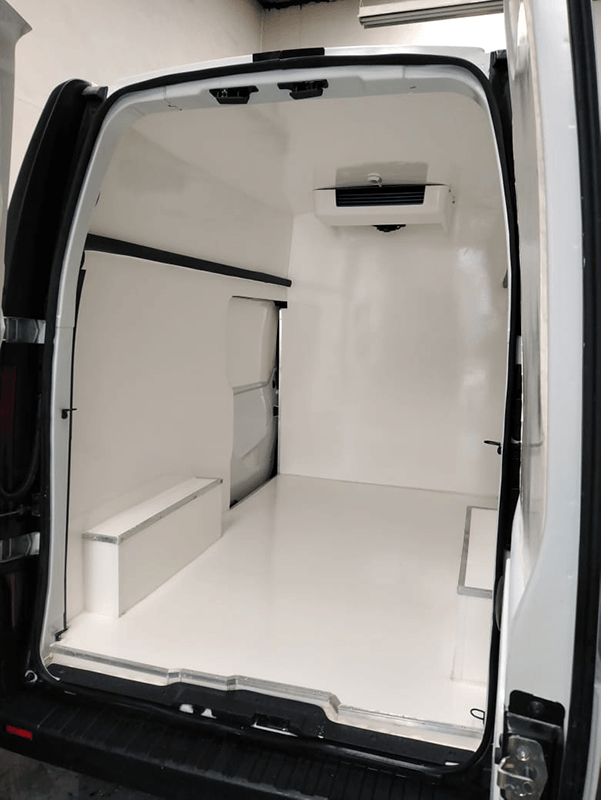
Protecting Freshness and Quality: From Crude Cooling to Precise Temperature Control
Traditional fuel-powered refrigerated trucks rely on a separate internal combustion engine as a power source for the refrigeration unit. This results in double energy consumption and emissions. The core breakthrough of electric refrigerated trucks is that their refrigeration compressor is directly driven by the vehicle's high-voltage power battery. A deeper transformation lies in the logic of temperature control itself. Traditional mechanical refrigeration units often operate in an all-or-nothing mode of high output or complete shutdown. The introduction of electric variable-frequency refrigeration technology allows the compressor to smoothly and continuously adjust its power according to the real-time heat load in the cargo compartment. This means that regardless of external environmental changes, the system can replenish cooling in a more precise and continuous manner, providing an unprecedented stable environment for temperature-sensitive medicines and high-end food.
Connecting the "Energy Channels": Intelligent Coordination of Driving and Refrigeration
Systematic optimization of energy consumption is another major advantage. The electric refrigeration unit is no longer an isolated energy-consuming unit, but is integrated into the vehicle's intelligent energy management network. The system can coordinate the energy allocation between driving power and refrigeration needs, ensuring the completion of transportation tasks while achieving optimal overall efficiency. From vehicle driving to cargo preservation, energy is utilized in an efficient closed loop, changing the previous situation where the two systems operated independently, resulting in cumulative energy consumption.
Reshaping the "Last Mile": Changes in Operational Thinking and Urban Access
The maturity of this technological path is driving a transformation in cold chain logistics operating models. Delivery points and residential areas no longer need to endure noise and local air pollution, clearing obstacles for cold chain services to enter core areas with higher environmental requirements. Fleet operators are shifting their focus from calculating fuel consumption and engine maintenance costs to more sophisticated energy management and total cost of ownership assessments. Crucially, stable temperature control directly translates into improved cargo quality assurance.
Driving Towards "Smart Nodes": From Transportation Tools to Data Terminals
Looking ahead, the development of electric refrigerated trucks will transcend the scope of a single transportation tool, becoming mobile nodes in a smart cold chain network. Their integrated intelligent temperature control systems serve as data collection and interaction terminals, enabling transparent traceability and predictive maintenance throughout the entire supply chain. When every vehicle in operation can provide real-time feedback on its core status and environmental data, the scheduling and risk management of the entire logistics network will become unprecedentedly precise and efficient.
From roaring engines to silent operation, from imprecise temperature control to precise protection, the evolution of electric refrigerated truck technology marks the arrival of a new era in urban logistics. It's not just a change in propulsion method, but a profound restructuring focused on efficiency, quality, and harmonious coexistence with the urban environment. The "last mile" of the cold chain is becoming quieter, more reliable, and smarter.