
Policy and market forces drive electric refrigeration units for vans into the fast lane
In recent years, driven by the national “dual carbon” strategy and the full implementation of the 14th Five-Year Plan for Cold Chain Logistics Development, the green transformation of the cold chain logistics industry has significantly accelerated. Since the beginning of this year, under the combined influence of favorable policies and robust market demand, electric refrigeration units for vans have moved from the “concept exploration” stage to “large-scale application” at an unprecedented pace, becoming a key enabler for quality upgrades in the cold chain transport sector.
Policy dividends create new opportunities for green cold chain
Relevant national authorities have recently introduced support measures for scrapping and replacing older operational trucks. New-energy trucks are eligible for substantial subsidies, with new-energy cold chain trucks receiving a fixed amount of financial support. At the same time, the revised industry standard, “Technical specifications for the configuration of food refrigerated vehicles for road transport,” has officially come into effect. It clearly includes requirements for urban delivery refrigerated vehicles to use new-energy or clean-energy vehicles, aligning with real operational needs and guiding the industry to accelerate technological upgrades. Under the dual push of policies and standards, the transition from oil to electricity in China’s cold chain transport equipment is steadily gaining momentum.
Market recognition grows as electrification becomes the mainstream
The combination of policy guidance and technological progress is directly reflected in the sustained market upturn. Industry statistics show that sales of new-energy refrigerated vehicles have risen month by month, and their market penetration has increased substantially compared to the past, displaying a robust growth trend. Supported by accurate market foresight and solid product strength, the new-energy refrigerated vehicle offerings of several mainstream manufacturers have been selling well in many core cities, establishing them as notable game‑changers in this segment. For cold chain transport operators, the appeal of electric refrigeration units has gradually shifted from early policy incentives to intrinsic cost and efficiency advantages, winning wide market recognition based on improved economics.
New products from industry giants drive leaps in electric refrigeration technology
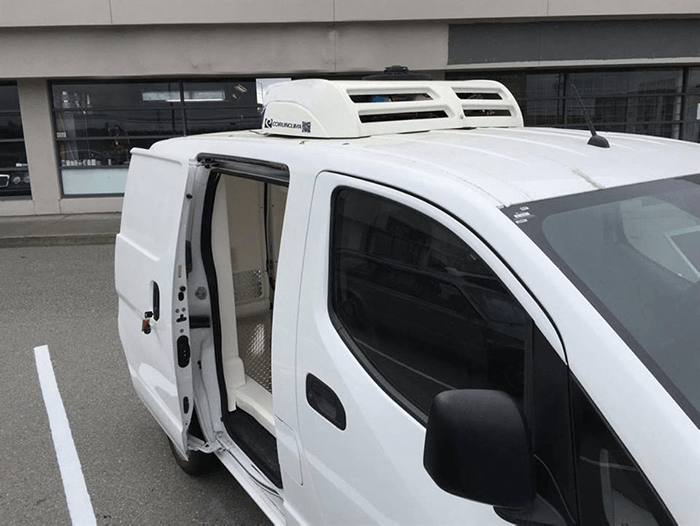
Strong market demand has also ignited technological innovation among leading companies. At a recent international transport logistics exhibition, major players in transport temperature control showcased a range of new all‑electric refrigerated solutions. For example, full‑electric refrigeration units for vans with various weight ratings, validated by independent third‑party assessments, achieve significant carbon dioxide emission reductions compared to traditional diesel units, are compatible with both all‑electric and conventional models, and are gradually entering mass production. In addition, a new generation of electric refrigeration units for vans, featuring more precise variable frequency intelligent control and a lighter structural design, has achieved meaningful energy savings and a substantial increase in heating capacity, providing solid technical support for improving the efficiency and quality of urban cold chain delivery.
Looking ahead: smart and efficient technologies drive industry upgrades
It is worth noting that next‑generation electric refrigeration technologies centered on “multi‑source energy replenishment” are also emerging in the market. Some high‑end platforms integrate battery storage, solar photovoltaic roofs, and regenerative electric axles, effectively reducing dependence on external charging and removing barriers to large‑scale commercial use of new‑energy refrigerated vehicles in long‑haul line‑haul logistics. Meanwhile, rapid technological breakthroughs are also occurring among domestic key component suppliers, with continuous innovation in core areas such as electric compressors and thermal management systems. Industry analysts believe that the current period is a critical one for electric cold chain transport to achieve a new level of market penetration. As local traffic‑rights policies continue to improve and the economic advantages of these products become even more evident, electric refrigeration units for vans are set to become the core element driving the entire cold chain logistics industry toward a green, low‑carbon, and high‑quality future.