
Electric Van Refrigeration Units Become the New Standard for Cold Chain Logistics: Ushering in an Era of Green, Efficient, and Silent Operations
As the promotion of new energy vehicles in the urban distribution sector continues to intensify, refrigeration units—a critical component of cold chain transport—are undergoing a profound transformation. Traditional refrigeration methods, which rely on independent diesel engines for power, are rapidly being supplanted by fully electric refrigeration units powered directly by the vehicle's onboard battery pack. Industry insiders point out that this shift is not merely a natural extension of vehicle electrification; it also marks the formal entry of cold chain logistics into a brand-new phase of development characterized by green, efficient, and silent operations.
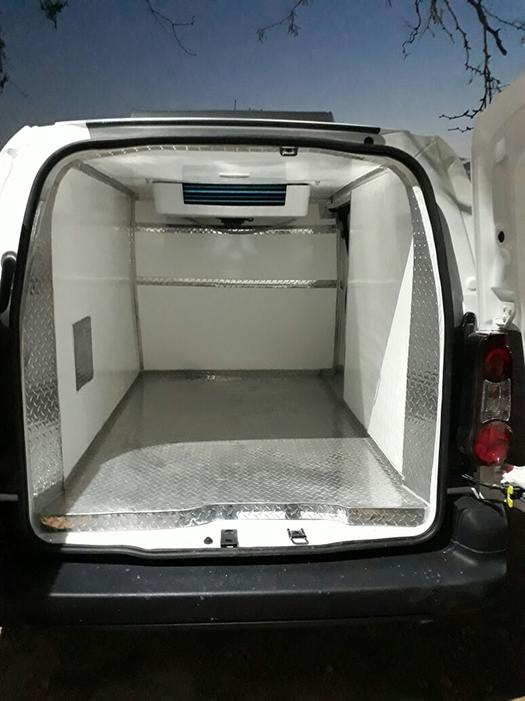
Environmental Friendliness and Silence: Upgrading the Essential Requirements for Urban Cold Chain Distribution
For a long time, refrigerated vans utilizing diesel-powered auxiliary units for cooling faced significant drawbacks when operating in urban areas: they generated exhaust emissions and produced substantial noise—factors that directly contradicted the low-carbon, eco-friendly positioning of new energy vehicles. Furthermore, a dual-power system entails additional maintenance costs and increased risks of mechanical failure; moreover, some cities have imposed traffic restrictions on vehicles equipped with diesel-powered auxiliary units. The advent of fully electric refrigeration units has completely resolved this dilemma. By drawing power directly from the new energy vehicle's chassis battery and utilizing high-efficiency DC compressors for cooling, these units achieve true "zero-emission" operation throughout the entire process—both while driving and while cooling. User feedback indicates that electric refrigeration units demonstrate far greater energy efficiency than traditional diesel units during specific operating conditions—such as during stop-and-go loading/unloading or in slow-moving traffic congestion—while simultaneously drastically reducing operational noise. This makes them particularly well-suited for noise-sensitive scenarios, such as nighttime deliveries or operations within residential areas.
Precision and Intelligence: Meeting the Stringent Temperature Control Demands of High-End Cold Chains
Beyond the advantages of environmental friendliness and silent operation, electrification has also brought about a significant leap forward in temperature control precision and intelligent functionality. Traditional diesel refrigeration units typically employ fixed-frequency start-stop control mechanisms, which often result in temperature fluctuations within the cargo compartment—making it difficult to meet the stringent constant-temperature requirements for transporting sensitive goods such as pharmaceuticals and high-end fresh produce. In contrast, electric refrigeration units commonly utilize variable-frequency compressors and electronic expansion valves, enabling smooth, stepless temperature modulation that keeps temperature fluctuations confined within an extremely narrow range. Building upon this foundation, a new generation of intelligent electric refrigeration units integrates IoT communication modules with cloud-based management platforms. These systems can transmit real-time data—including compartment temperature, humidity, door status (open/closed), and unit operating parameters—back to a central hub, enabling remote alerts and automatic adjustments in the event of any operational anomalies. Some advanced models even feature adaptive learning capabilities based on historical data and real-time operating conditions, enabling further reductions in energy consumption. Driven by regulatory requirements for fully traceable cold chains, electric refrigeration units equipped with data logging and remote control functions are gradually becoming a mandatory entry threshold for the industry.
Range Synergy: System Optimization—From "Competing for Power" to "Integrated Management"
To address the common user concern regarding the conflict between driving range and refrigeration power demands, vehicle manufacturers and refrigeration unit suppliers are collaborating to introduce a range of solutions. By optimizing the vehicle's overall thermal management architecture—integrating and centrally scheduling the cab air conditioning, battery thermal management, and cargo compartment refrigeration—they eliminate redundant energy consumption. Simultaneously, the use of flexible solar panels mounted on the cargo compartment roof to provide auxiliary power for the refrigeration unit is rapidly gaining traction. Furthermore, the promotion of battery swapping models offers a novel approach to long-duration, continuous cold chain transport; vehicles can undergo simultaneous battery replacement and operational status diagnostics at swapping stations, ensuring uninterrupted, round-the-clock operations. As the energy density of power batteries continues to rise and vehicle energy consumption designs undergo continuous optimization, "range anxiety" is gradually subsiding.
Policy Catalysts and Market Outlook: The Future of Green Cold Chains Has Arrived
From a policy perspective, numerous regions have incorporated new energy refrigerated vehicles into their pilot programs for green urban freight distribution, granting vehicles equipped with electric refrigeration units preferential traffic access and operational support. Concurrently, the pace of phasing out and replacing aging diesel-powered refrigerated vehicles is accelerating, opening up a vast market for the retrofit replacement of existing fleets with electric refrigeration units. Industry consensus suggests that over the coming years, the application of electric refrigeration units for box trucks will steadily expand beyond their current stronghold in the light-duty and mini-truck segments to encompass medium- and heavy-duty refrigerated vehicles. Meanwhile, cutting-edge technologies—such as oil-free centrifugal compressors, magnetic levitation bearings, and phase-change thermal storage—have entered the engineering validation phase and hold the promise of breaking through existing bottlenecks in energy efficiency and reliability.
From fuel-powered to electric, and from simple refrigeration to intelligent temperature control, electric refrigeration units for box trucks are redefining the technological boundaries of cold chain logistics. Driven by the modern era's demands for green, precise, and efficient solutions, this transformation represents more than just equipment upgrades; it signifies that the entire cold chain industry is accelerating toward a more sustainable future.