
Electric Truck Refrigeration Equipment Accelerates Breakthroughs; Cold Chain Logistics Enters a New "Green" Lane
Driven by the dual forces of the "Dual Carbon" strategy and consumer upgrades, electric truck refrigeration equipment is emerging as the core engine for the transformation and upgrading of the cold chain logistics industry. As demand for high-end logistics—such as fresh food e-commerce and pharmaceutical cold chains—continues to climb, the market for new-energy refrigerated vehicles is entering a period of rapid growth. Consequently, the refrigeration equipment that serves as a critical supporting component for these vehicles is undergoing a profound transformation, spanning everything from technology to the broader ecosystem. Traditional cold chain transport has long relied on fuel-driven refrigeration units, which suffer from high energy consumption, excessive noise, and increasingly acute emissions pressures. In contrast, electric truck refrigeration equipment utilizes pure electric drive technology, enabling zero emissions for both the vehicle and its refrigeration system while simultaneously drastically reducing operating costs and maintenance complexity; it is now rapidly accelerating toward large-scale commercial application.
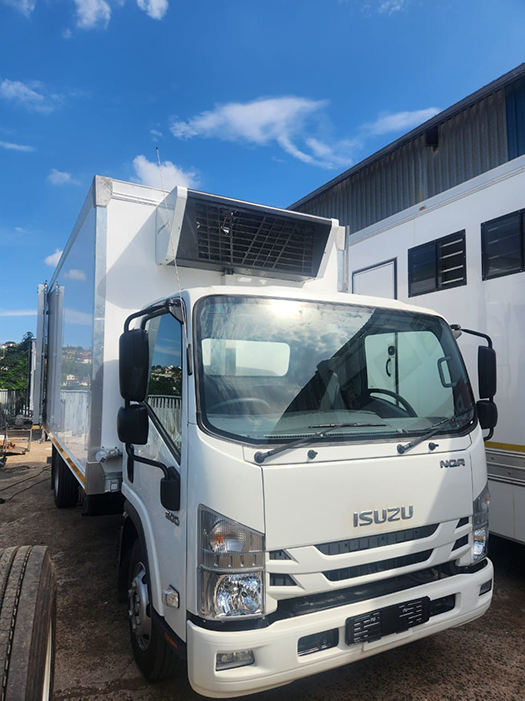
Technological Innovation: Moving from "Functional" to "Efficient and Intelligent"
In the past, one of the most significant pain points facing electric refrigerated vehicles was "range anxiety"—the concern that the refrigeration system and the vehicle's propulsion system drawing power simultaneously from the same battery pack would, particularly under the increased cooling loads of high-temperature environments, lead to a drastic reduction in the vehicle's overall driving range. To address this challenge, a new generation of electric refrigeration units employs high-efficiency variable-frequency scroll compressors and intelligent electronic expansion valves. These components can automatically adjust cooling output based on temperature fluctuations inside the cargo compartment and changes in the external environment, thereby minimizing energy consumption while still strictly adhering to temperature control requirements. The introduction of multi-source heat pump technology represents another major breakthrough: during the winter months, the refrigeration equipment can harness the residual heat generated by the vehicle's electric motor and battery pack to warm the cargo compartment, thereby significantly reducing the additional power drain typically associated with electric heating systems. Through the deep optimization of compressors, heat exchangers, and control algorithms, the overall energy efficiency ratio of the system has been significantly enhanced, effectively mitigating the issue of range degradation.
Lightweighting and Integration: Unlocking Operational Potential
Lightweighting and integrated design have emerged as key developmental directions for electric refrigeration equipment. The successive introduction of innovative oil-free cooling compressors, highly compact heat exchanger cores, and integrated control units has enabled a drastic reduction in both the size and weight of electric refrigeration units compared to traditional models. This not only creates more usable cargo volume within the truck's compartment but also reduces the vehicle's overall curb weight, thereby further enhancing operational economic efficiency. Concurrently, a modular design philosophy has enabled a deeper integration of refrigeration equipment with the truck chassis and power battery system. This integration minimizes losses associated with intermediate wiring harnesses and piping, thereby enhancing overall system reliability. For cold chain transport enterprises, lighter, more compact, and more efficient refrigeration units translate into increased cargo capacity per trip and reduced power consumption per kilometer—making the operational economics significantly clearer.
Intelligent Empowerment: Precision Temperature Control and Remote Management
The level of intelligence represents another standout feature of refrigeration equipment for electric trucks. Leveraging onboard IoT modules and cloud platforms, cold chain operators can monitor the real-time operating status of each refrigeration unit—including cargo compartment temperatures, fault alerts, and energy consumption data—while also enabling remote power switching, temperature setting, and defrosting control. Furthermore, big data analytics assist fleets in optimizing delivery routes and refrigeration strategies, thereby reducing total lifecycle costs while simultaneously safeguarding cargo quality. For temperature-sensitive goods—such as pharmaceuticals and high-end fresh produce—precision temperature control capabilities accurate to within ±0.5°C have become a standard feature of high-end electric refrigeration units. Should equipment anomalies arise, the system proactively pushes fault codes and maintenance recommendations, significantly reducing downtime and ensuring the integrity of the cold chain remains unbroken.
Policy Tailwinds and Market Drivers
At the policy level, strong momentum has been injected into the industry's development. The state continues to intensify its efforts to promote new energy commercial vehicles, incorporating older operational trucks into subsidy programs for vehicle scrapping and replacement, with a clear priority placed on upgrading to electric models. Local governments have introduced a suite of supporting policies—including exemptions from traffic restrictions, priority road access rights, and toll fee reductions—further lowering the practical operational barriers for new energy refrigerated trucks. Consequently, an increasing number of urban logistics and distribution firms, as well as specialized cold chain transport companies, are adopting electric truck refrigeration equipment as their preferred solution for fleet modernization. The market side also signals positive trends: consumer expectations regarding the quality of fresh produce are rising, while e-commerce platforms are imposing increasingly stringent standards for fully traceable, temperature-controlled delivery. These factors are collectively compelling the cold chain transport equipment sector to accelerate its transition toward electrification and intelligent automation.
Challenges and Outlook
Of course, the industry still faces certain practical challenges. The deployment of charging infrastructure within cold chain logistics hubs remains incomplete; furthermore, the simultaneous power demand from refrigeration equipment and propulsion systems during peak hours places heightened demands on battery thermal management. Additionally, the sparse coverage of maintenance service networks in certain remote regions poses a challenge to the provision of effective after-sales support for electric refrigeration units. Nevertheless, as battery energy density continues to rise, thermal management technologies undergo continuous iteration, and charging and battery-swapping networks rapidly expand, these bottlenecks are being overcome one by one. Industry experts point out that electric truck refrigeration equipment has now passed a critical inflection point—shifting from the question of "whether to use it" to "how to utilize it optimally." Driven jointly by the "Dual Carbon" goals and deepening user awareness, this specialized market segment is currently entering a pivotal window of transition—moving from a policy-driven model to one powered by market forces. Looking ahead, more efficient, intelligent, and reliable electric refrigeration solutions will empower the cold chain logistics industry to embark on a new trajectory of green, low-carbon, and high-quality development.