
DC Electric Air Conditioners for Ambulances Gain Ground
As new energy technologies continue to permeate the field and public health emergency systems are steadily upgraded, DC electric air conditioners for ambulances are moving from an “optional feature” to a “standard component.” Traditional ambulance air conditioners rely largely on the vehicle’s engine, which not only consumes high amounts of fuel and generates significant noise but also fails to provide continuous cooling when the engine is turned off while parked. DC electric air conditioners, by contrast, draw power directly from the vehicle’s battery or high-voltage traction battery and operate independently of the engine, becoming an essential technological safeguard in pre‑hospital emergency care.
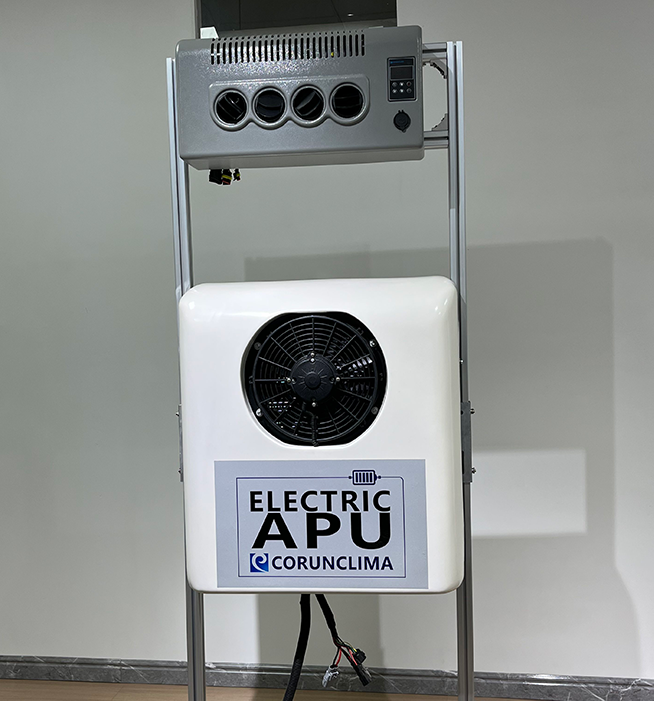
Independent Operation: A Round‑the‑Clock “Peace of Mind” for Life‑Saving Missions
For emergency tasks that shuttle between cities and rural areas, frequent starts and stops and extended periods of engine‑off parking are the norm. If the medical compartment’s air conditioner cannot operate independently, not only may drug storage temperatures be compromised, but critically ill patients may also suffer in extreme heat or cold. DC electric air conditioners precisely address this pain point. They employ high‑efficiency brushless DC compressors and incorporate automatic main battery protection, ensuring that the air conditioner operates within safe power limits and completely eliminating the risk of battery drain. Regardless of whether the engine is running or not, the medical compartment maintains a constant temperature – protecting medicines and equipment while creating a relatively quiet and comfortable environment for both patients and medical staff.
Energy Saving and Noise Reduction: A Key Piece of the Green Emergency Care Puzzle
Driven by dual‑carbon policies and the global wave of new energy vehicles, the green transformation of ambulance fleets is accelerating. Traditional engine‑idling air conditioning consumes large amounts of fuel, whereas DC electric models significantly reduce fuel consumption and carbon emissions, helping pre‑hospital services achieve both economic and environmental benefits. At the same time, low‑noise operation is equally crucial in emergency scenarios. Quiet running not only avoids causing psychological distress to patients and their families but also ensures that medical staff inside the compartment can communicate effectively and stay focused without outside interference. Moreover, because many mechanical transmission parts of conventional air conditioners are eliminated, vehicle maintenance frequency is also greatly reduced.
Maturing Technology: Multiple DC Solutions Roll Out
In recent years, new products in the field of DC electric air conditioning for ambulances have emerged frequently, and market competition has become increasingly vibrant. Fully electric rooftop air conditioning systems designed for light commercial vehicles have achieved large‑scale application, providing ample cooling capacity and adapting to the power supply platforms of various new‑energy ambulances. These systems generally employ intelligent inverter compressor control technology, support continuous operation while driving or parked, use environmentally friendly refrigerants, and feature very low noise during stationary periods as well as a highly integrated design. Domestic technology development is advancing in parallel, with dedicated air conditioning architectures for new‑energy ambulances continuously emerging, aiming to reduce maintenance costs and overcome the space constraints of traditional on‑board air conditioning.
Policy and Industry Standards: Moving into the Fast Lane
While technology evolves, relevant industry standards are also being improved. For on‑board independent air conditioning products powered by battery DC power, the industry has developed installation technical requirements and test methods, providing a standardisation guarantee for safe product use. From freight trucks to various types of special‑purpose ambulance vehicles, the demand for independent parking air conditioners has become a rigid trend. With the restructuring of the national public health emergency response system and policy support for the replacement and upgrading of new‑energy equipment, the clean‑energy transformation of medical vehicles has gained a solid policy foundation.
From a single system dependent on the engine to a fully electrified, independent intelligent solution, DC electric air conditioner technology for ambulances is reshaping pre‑hospital emergency operations in an irreversible way. It concerns not only whether an emergency patient can be properly transported in extremely uncomfortable conditions, but also the overall upgrade and evolution of the public health service system toward greater sustainability and intelligence.