
Corunclima T35B Air Conditioning Systems Delivered as Part of Peru’s UNOPS Ambulance Project
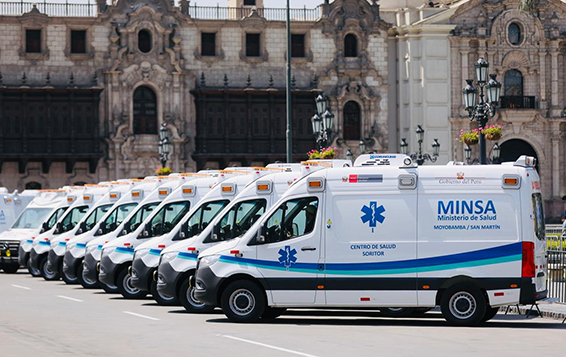
A fleet of new ambulances, procured under the management of the United Nations Office for Project Services (UNOPS) in Peru, has officially entered service. Each vehicle is equipped with the Corunclima T35B roof-mounted air conditioning system. The President of Peru personally attended the delivery ceremony, an event that garnered significant attention from both the public and the media, and is regarded as a pivotal milestone in Peru's efforts to bolster its emergency medical response capabilities and elevate national healthcare standards.
The Integrated Roof-Mounted T35B: Engineered for Emergency Response Conditions
he T35B is a specialized, electrically driven air conditioning unit developed by Corunclima specifically for ambulance applications. Featuring an integrated roof-mount design, the unit does not intrude upon the medical workspace or stretcher area within the rear cabin, while simultaneously avoiding structural interference issues often associated with chassis modifications. Its core operational logic differs fundamentally from traditional engine-belt-driven AC systems: the T35B is powered independently by the vehicle's onboard electrical system, ensuring uninterrupted operation regardless of whether the engine is idling.
This capability ensures that the ambulance maintains a constant temperature in the rear cabin across a range of typical scenarios: during prolonged stops at accident scenes to administer initial treatment; while navigating slowly through congested traffic; while waiting outside emergency departments to transfer patients; or while parked at an emergency station, allowing the AC to run without the need to keep the engine continuously idling. For patients suffering from trauma, burns, high fever, or cardiovascular emergencies, a stable thermal environment directly influences their clinical prognosis and the conditions for subsequent in-hospital care.
Engineering Considerations: Adapting to Peru’s Diverse Climates and Geographies
Peru encompasses three distinct climatic zones: the arid, scorching heat of the coastal desert regions; the intense solar radiation and extreme diurnal temperature fluctuations of the Andean highlands; and the high-temperature, high-humidity environment of the Amazon rainforest. During the design phase, the T35B underwent rigorous validation testing specifically tailored to these conditions. The compressor is engineered to maintain undiminished cooling efficiency even under heavy loads; the condenser and refrigerant lines feature corrosion-resistant coatings to withstand the corrosive salt mist of coastal areas and the high humidity of the rainforest; and the electrical control unit is designed to adapt to wide voltage fluctuations within the vehicle's power system, thereby preventing system shutdowns caused by unstable voltage.
At the delivery ceremony, the roof of each new ambulance clearly displayed the installed cooling unit and the Corunclima brand logo. The integration of this temperature control system enables the ambulance to provide a reliable cabin environment for both the medical team and the patient during scenarios involving long-distance transfers and extended on-site standby periods.
The Dual Benefits of Low Noise and Reduced Fuel Consumption
In terms of noise control, actual measurements taken in the rear cabin of the T35B—even under full-load operation—demonstrated noise levels significantly lower than those produced by traditional engine-driven air conditioning systems running at idle. This minimizes the risk of critical sounds—such as those from auscultation, patient-provider dialogue, and patient monitor alarms—being drowned out by background noise. Furthermore, because the air conditioning system no longer draws power directly from the engine—thereby reducing the load on the accessory drive belt system—the vehicle’s overall fuel consumption is tangibly reduced. This contributes to lower long-term operating costs for healthcare institutions and simultaneously reduces exhaust emissions in the vicinity of emergency response stations.
A Global Strategy Focused on Thermal Management for Specialty Vehicles
Corunclima remains steadfastly focused on providing air conditioning and refrigeration solutions for a diverse range of specialty vehicles, including ambulances, commercial vans, buses, and other dedicated-purpose models. The company’s participation in the UNOPS emergency vehicle project in Peru serves as tangible proof that its automotive climate control technology and manufacturing capabilities have garnered substantial recognition within international markets. The company emphasizes that its investments in product R&D and manufacturing quality are consistently centered on ensuring reliability, durability, and ease of maintenance within real-world operating environments, with the ultimate goal of providing truly practical climate control solutions for critical vehicle operations worldwide.
Through projects such as this, Corunclima is progressively establishing a foundation for long-term collaboration with national health authorities and international organizations, utilizing the proven performance of its products to effectively address the critical and non-negotiable demand for stable on-board temperature control within the field of pre-hospital emergency care.