
Walk-In Trailer Cooling Units Respond to Rising Demand for Mobile Cold Storage Solutions
Cold chain logistics is no longer limited to fixed routes and centralized warehouses. As distribution models become more decentralized, logistics operators are increasingly relying on walk-in trailer cooling units to support flexible, on-demand temperature-controlled storage and transport. These systems are now viewed not just as transport equipment, but as mobile cold storage assets that can adapt to changing operational needs.
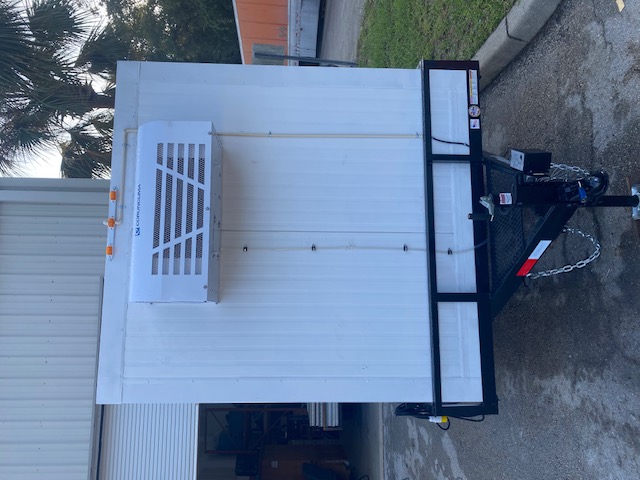
Walk-in trailer cooling units are specifically designed for trailers that require frequent access and high internal volume. Unlike traditional closed refrigeration systems, their walk-in configuration allows personnel to enter the trailer directly, making them suitable for loading, sorting, and temporary storage at multiple points along the supply chain.
Operational Shifts Driving Adoption
Several changes in logistics operations are contributing to the rising use of walk-in trailer cooling units. Shorter delivery cycles, increased handling frequency, and the growth of regional distribution hubs all demand refrigeration solutions that can maintain temperature stability despite frequent door openings and extended stationary periods.
In many cases, trailers equipped with walk-in cooling units are used as temporary cold rooms at distribution centers, retail locations, or event sites. This dual-function capability reduces dependency on permanent infrastructure and allows businesses to scale cold storage capacity quickly.
Companies such as Corunclima are responding to these operational trends by developing walk-in trailer cooling units that emphasize reliability, adaptability, and efficient temperature recovery after access cycles.
Design Focus of Corunclima’s Walk-In Trailer Cooling Units
Rather than prioritizing maximum output alone, Corunclima’s walk-in trailer cooling units are engineered around real-world usage patterns. Key design elements include:
Stable Temperature Recovery
Ensures rapid return to set temperature after door openings and loading activities.
Flexible Deployment
Suitable for transport, temporary storage, and on-site cooling applications.
Optimized Energy Use
Balances cooling performance with energy efficiency during both mobile and stationary operation.
Reduced Acoustic Impact
Enables use in mixed-use environments without disrupting surrounding activities.
Long-Duty Reliability
Built for continuous operation in logistics scenarios with high access frequency.
Value for Logistics and Distribution Operators
Improved efficiency during loading and unloading
Reduced product degradation caused by temperature fluctuations
Greater flexibility in cold storage planning
Lower reliance on fixed cold room infrastructure
Enhanced operational resilience during peak demand periods
Cross-Industry Use Cases
Walk-in trailer cooling units are increasingly utilized across fresh food distribution, catering logistics, agricultural transport, pharmaceutical supply chains, and temporary cold storage services. Their ability to function as mobile refrigeration spaces makes them particularly useful for operations that require rapid deployment or seasonal capacity expansion.
Industry Direction
As cold chain networks continue to move toward modular and flexible models, walk-in trailer cooling units are expected to play a more strategic role. Future development will focus on smarter control systems, improved insulation efficiency, and better integration with fleet management practices.
Conclusion
The growing role of walk-in trailer cooling units reflects a broader transformation in cold chain logistics, where flexibility and adaptability are as important as cooling performance. With solutions from Corunclima, operators can deploy mobile refrigeration assets that support diverse use cases while maintaining consistent temperature control. As logistics models continue to evolve, walk-in trailer cooling units will remain a key tool for modern, decentralized cold chain operations.