
Silent Guardian of Life: DC Electric Air Conditioning Technology Drives Ambulance Upgrades
Within the emergency medical services system, an ambulance serves as far more than just a means of transport; it functions as a mobile, miniature emergency room. The temperature, humidity, and acoustic environment inside the vehicle directly impact a patient's condition as well as the precision of medical procedures performed by the crew. In recent years, DC electric air conditioning systems have been gradually replacing traditional engine-driven units, becoming a standard feature in modern ambulances and providing a quieter, more stable, and cleaner environmental foundation for emergency care.
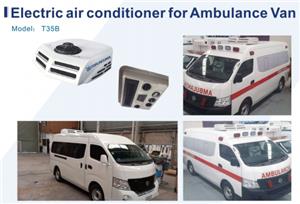
The Pain Points of Traditional Solutions: Roar, Fluctuation, and Energy Consumption
Historically, the vast majority of ambulance air conditioning systems relied on the vehicle's engine to drive the compressor. Whether the vehicle was in transit or parked on standby, the engine had to run continuously whenever cooling or heating was required. This design presented unavoidable drawbacks: the roar of the engine and the vibration of the vehicle body were constant companions. For critically ill patients requiring absolute tranquility, this additional noise stimulus amounted to an unnecessary burden. Furthermore, the cooling or heating output of the air conditioning system fluctuated in tandem with the engine's RPM, resulting in inconsistent performance and temperatures inside the cabin that would oscillate between hot and cold. Prolonged idling not only consumes vast amounts of fuel but also accelerates engine wear; moreover, exhaust fumes can easily accumulate in garages or confined spaces, compromising the surrounding air quality.
The Core Advantages of DC Electric Air Conditioning: Quiet, Independent, and Precise
DC electric air conditioning technology has completely revolutionized this landscape. The system employs an electric-drive architecture that operates independently of the engine, drawing power directly from the vehicle's onboard battery pack and utilizing dedicated built-in DC compressors and fan units. Whether the vehicle is in motion or the engine is switched off, the air conditioning system can operate autonomously, eliminating the need for the engine to run continuously. The most immediate and palpable change is the silence: without the roar of the engine during operation—and with compressor vibrations effectively isolated—the vehicle interior remains remarkably quiet. For patients suffering from acute myocardial infarction, stroke, or severe trauma, a quiet environment helps stabilize their emotional state and reduce oxygen consumption; it also facilitates the use of stethoscopes by medical personnel. With the elimination of vibration, the difficulty associated with performing delicate procedures—such as IV insertions or endotracheal intubations—while the vehicle is in transit has been significantly reduced for emergency responders.
The precision and stability of temperature control constitute another major highlight. The DC electric air conditioning system features an independent, intelligent control unit capable of automatically adjusting power output based on the actual temperature inside the cabin, thereby ensuring smooth and precise temperature regulation. Whether amidst the scorching heat of midsummer or the biting cold of a winter night, the interior of the ambulance consistently maintains a comfortable temperature—a feature of particular importance for infants, elderly patients, or trauma victims suffering from hypothermia, all of whom possess compromised thermoregulatory capabilities.
Human-Centric Upgrades: Protecting Both Patients and Providers
For emergency response teams, the DC electric air conditioning system offers benefits that extend beyond patient comfort to encompass a significant improvement in their professional working environment. Emergency medical work is inherently physically demanding and fast-paced; if medical personnel are forced to endure sweltering heat or biting cold within the confines of a sealed cabin, both their physical stamina and mental focus will be severely compromised. A workspace that is maintained at an optimal temperature—quiet, comfortable, and conducive to concentration—empowers them to approach every life-saving intervention in peak condition.
From an energy utilization perspective, the high efficiency of DC electric air conditioning is also noteworthy. By directly driving the compressor via electricity, the system minimizes energy transmission pathways and reduces power loss, resulting in superior energy efficiency. Modern ambulances are typically equipped with high-capacity battery packs or auxiliary power systems, providing ample power to sustain the air conditioning system for extended periods without compromising the vehicle's ability to start or maneuver. Furthermore, some newer models incorporate intelligent power management features that automatically balance the air conditioning load against the power demands of other onboard medical equipment, thereby ensuring that all critical life-saving devices remain fully operational and ready for immediate use.
As the philosophy of emergency medical care continues to evolve and deepen, the design of ambulances is shifting toward greater professionalism and human-centricity. While DC electric air conditioning may not—unlike life-support equipment—directly determine the outcome between life and death, it nonetheless plays a vital, albeit subtle, role in safeguarding the quality of every patient transport by optimizing the environmental conditions within the cabin. Quiet, clean, intelligent, and stable—this advanced system is rapidly becoming a standard feature in modern ambulances, adding a layer of warmth and tranquility to the critical "corridor of life."