
Portable Refrigerated Trailers: Flexible Temperature-Controlled Solutions Addressing Last-Mile Cold Chain Challenges
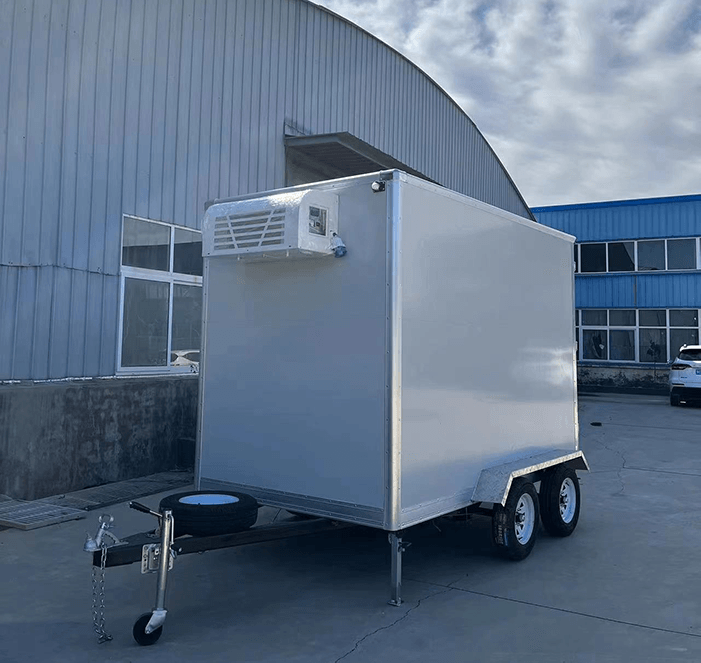
In recent years, driven by consumption upgrades and the diversification of logistics models, portable refrigerated trailers—compact units that can be flexibly hitched to standard passenger vehicles or light commercial vehicles—are transitioning from specialized equipment to broader commercial and consumer applications. These mobile refrigeration units effectively bridge the "temperature gap" between long-haul cold chain transport and last-mile delivery, serving as a crucial component in completing urban and rural cold chain networks.
Precision Temperature Control: Technology Empowering Mobile Cold Chains
Technically speaking, portable refrigerated trailers are not merely scaled-down versions of traditional refrigerated trucks. Their core strength lies in the seamless integration of an independent, high-efficiency refrigeration unit with a high-performance insulated cargo box. The box utilizes lightweight, high-strength composite materials and a multi-layer insulation structure, ensuring long-term internal temperature stability even in challenging weather conditions. Powered by new energy technology, the refrigeration system operates continuously whether the vehicle is parked or in motion. It supports a wide temperature range—from freezing to constant ambient temperatures—meeting the storage and transport requirements for fresh produce, pharmaceuticals, and other temperature-sensitive goods. Some models also feature smart remote monitoring modules, allowing users to track internal environmental parameters and equipment status in real-time via mobile devices, thereby enabling transparent management throughout the cold chain process.
Versatile Adaptability: Overcoming Last-Mile Application Bottlenecks
In terms of application, the value of portable refrigerated trailers extends beyond commercial logistics. For fresh food e-commerce, food service supply chains, and community retail outlets, these trailers resolve quality degradation issues caused by a lack of flexible cold storage tools during traditional delivery. Operators can drive directly to production sites or wholesale hubs to pick up goods based on order demand and then safely deliver them to various distribution points; this ensures continuous temperature control throughout the process, significantly reducing operational risks associated with temperature fluctuations. Furthermore, within emergency response systems, these units can be rapidly deployed to the scene of emergencies or natural disasters. Acting as temporary cold storage hubs, they provide the necessary environmental conditions for relief supplies and emergency medicines, effectively enhancing public safety response capabilities. Moreover, as outdoor lifestyles become increasingly diverse, portable refrigerated trailers are emerging as a practical solution for storing fresh food and beverages during road trips, field operations, and outdoor activities, thereby satisfying the public's desire for high-quality outdoor experiences.
Regulation Paves the Way for New Growth Opportunities
From an industry perspective, the rise of portable refrigerated trailers aligns perfectly with the strategic upgrading of national logistics infrastructure. Cold chain networks are currently expanding from major hubs to reach urban communities, rural areas, and even mobile platforms, creating a demand for equipment that offers greater flexibility, cost-effectiveness, and rapid deployment capabilities. These trailers fill a critical gap in meeting flexible storage needs that fixed cold storage facilities and large refrigerated trucks cannot address. Their low barrier to entry and ease of operation enable numerous small and medium-sized enterprises to access professional cold chain systems at a lower cost, fostering more refined operations across the entire supply chain. Furthermore, the use of green refrigeration technologies and energy-efficient materials gives these units a relative advantage in terms of energy consumption and environmental impact, aligning with broader trends toward sustainable development. Naturally, as an emerging product category still in its growth phase, the standardization and regulation of portable refrigerated trailers require further development. Industry stakeholders are focusing on establishing unified standards regarding manufacturing processes, safety performance, and road access rights; such measures aim to ensure operational safety and maintain public order while fostering the industry's healthy growth. As relevant technologies mature and application scenarios expand, portable refrigerated trailers are poised to play an increasingly vital role in future logistics and lifestyle service networks—delivering freshness and quality with agility, and providing a reliable safeguard for societal convenience and safety.