
Electric Van Refrigeration Equipment: A Green Revolution in Cold Chain Logistics
With increasing global emphasis on environmental protection and sustainable development, electric van refrigeration equipment is undergoing a profound technological transformation. As a crucial link in the cold chain logistics chain, the electrification of refrigeration equipment is not only an inevitable choice for technological upgrading but also a vital support for achieving green logistics.
Technological Innovation Under the Wave of Electrification
Traditional van refrigeration equipment largely relies on the vehicle's main engine, increasing fuel consumption and emissions. Now, with the increasing adoption of new energy commercial vehicles, independently driven all-electric refrigeration units are becoming the market mainstream.
Currently, the core breakthroughs in refrigeration technology are mainly reflected in the following aspects: First, the innovation of compressors. New electric compressors use high-efficiency permanent magnet synchronous motors, significantly improving energy efficiency compared to traditional mechanical compressors. Some leading technologies have achieved miniaturization and weight reduction of compressors, significantly reducing equipment size and weight while maintaining the same cooling capacity, leaving more effective cargo space for vans.
Second, the application of intelligent control systems. Modern electric refrigeration equipment is generally equipped with intelligent temperature control systems, which can automatically adjust the refrigeration power according to changes in the temperature inside the compartment, achieving precise temperature control while minimizing energy consumption. The application of remote monitoring and fault diagnosis functions allows fleet managers to monitor the operating status of each refrigeration unit in real time, significantly improving the reliability of cold chain transportation.
Diversification of Product Forms
To meet the needs of different application scenarios, electric van refrigeration equipment is exhibiting diversified product forms.
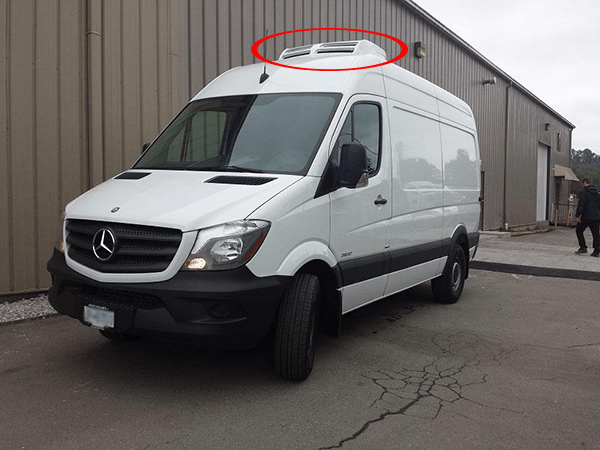
In terms of installation methods, separate and integrated designs each have their advantages. The separate design separates the condenser and evaporator, offering greater flexibility to adapt to different vehicle models; while the integrated design integrates all refrigeration components into a single unit, often using roof mounting, which does not occupy interior cargo space, maintains the integrity of the vehicle body, and makes installation and maintenance more convenient.
Regarding voltage platforms, refrigeration equipment has developed two main technical routes—low-voltage and high-voltage—for vehicles with different power types. The low-voltage system is primarily compatible with traditional 12V or 24V battery systems, suitable for the electrification of traditional fuel-powered trucks; the high-voltage system directly interfaces with the high-voltage battery platform of pure electric trucks, offering superior energy efficiency.
In terms of cooling capacity, the product range is increasingly comprehensive, from kilowatt-level refrigeration units suitable for small vans used in urban delivery to tens of kilowatts of refrigeration systems serving large trucks in long-haul transportation, meeting the needs of different temperature ranges from pharmaceutical transportation and fresh food delivery to frozen food transportation.
Environmental friendliness has become a core competitive advantage.
The widespread use of environmentally friendly refrigerants is a key characteristic of the current development of electric refrigeration equipment. Refrigerants commonly used in traditional refrigeration equipment, due to their ozone-depleting effects or high global warming potential, are gradually being replaced by new environmentally friendly refrigerants. The new generation of refrigerants significantly reduces environmental impact while maintaining refrigeration performance.
Energy consumption is also a key indicator of product competitiveness. Through optimized refrigeration system design, the application of high-efficiency heat exchangers, and intelligent control strategies, the energy consumption level of modern electric refrigeration equipment continues to decline. For electric vans, reduced energy consumption of refrigeration equipment translates to significantly improved driving range, which is crucial for alleviating user anxiety.
Expanding Application Scenarios
The application of refrigeration equipment in electric vans is extending beyond traditional food cold chain logistics to more fields.
Driven by the booming development of fresh food e-commerce, urban fresh food delivery has become the largest application market. The characteristics of high timeliness, high delivery frequency, and stringent temperature requirements place higher demands on the rapid cooling capacity and temperature control accuracy of refrigeration equipment.
Pharmaceutical cold chain transportation, as a high-end application area, places particularly stringent requirements on the reliability of refrigeration equipment. The transportation of special goods such as vaccines and biological agents requires full control within a specified temperature range, which drives the development of intelligent refrigeration equipment with multiple backup functions and full traceability capabilities.
Furthermore, goods with special temperature requirements during transportation, such as flowers, chemical products, and electronic components, have also opened up new application opportunities for electric refrigeration equipment.
Future Development Trends
Looking ahead, the technological development of refrigeration equipment in electric vans will deepen along the following directions:
Continuous improvement of energy efficiency remains the core task of technological research and development. By applying new, high-efficiency components, optimizing system matching, and recovering waste heat, the overall energy efficiency of refrigeration equipment is expected to achieve new breakthroughs.
The level of intelligence will be further enhanced. Combined with IoT technology, future refrigeration equipment will not only be temperature control devices but will also become crucial nodes in the cold chain logistics information system, enabling comprehensive perception of cargo status, equipment operation, and environmental conditions.
The balance between standardization and customization will be a key challenge for the industry's development. While key components and interfaces are gradually standardized, providing customized solutions to meet the differentiated needs of different market segments will become a critical competitive advantage for enterprises.
The maturity of multi-temperature zone control technology will make it possible for a single vehicle to transport goods with multiple temperature requirements simultaneously, further improving the efficiency and flexibility of cold chain logistics.
Technological advancements in electric van refrigeration equipment are profoundly changing the face of cold chain logistics. Guided by the development concepts of green, efficient, and intelligent, this field will continue to unleash innovative vitality, playing a more important role in ensuring food safety, promoting pharmaceutical distribution, and facilitating consumption upgrades.