
Electric Small Van Refrigeration Units: The Silent Guardians of City Streets
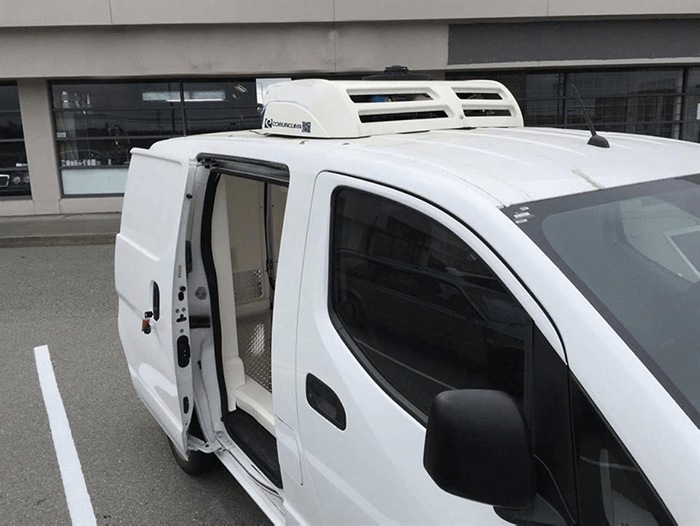
In the early morning, before the city fully awakens, a white van quietly drives into the old alleyways. It smoothly stops at the back door of a community convenience store, its engine barely audible. The driver gently opens the cargo compartment, and a steady stream of cool air flows out, a stark contrast to the stifling summer heat. Fresh ingredients are neatly stacked inside, covered with a uniform layer of frost, maintaining their perfect freshness. This is a silent revolution happening right around us – electric small van refrigeration units are redefining the daily landscape of urban cold chain logistics in their own unique way.
Saying Goodbye to the Roar: From "Audible Refrigeration" to "Imperceptible Protection"
The departure from traditional diesel refrigeration units begins with the sound. In the past, cold chain vans were always heard before they were seen – that distinctive mix of compressor hum and diesel engine noise, especially noticeable in the early morning or late at night. Now, electric units have reduced operating noise to near background levels. Drivers find they can talk more peacefully with recipients, work in residential areas at night without worrying about complaints, and the entire work environment is transformed by this quietness.
This quietness is not just a reduction in decibels; it represents a complete restructuring of the power logic. Electric refrigeration no longer requires a separate diesel engine, but cleverly utilizes the vehicle's own electrical energy, using an intelligent distribution system to achieve harmonious coexistence of refrigeration and driving. Like an experienced housekeeper, it knows when to work at full capacity and when to maintain a low profile, maximizing the efficiency of limited electrical energy.
Precise Care: Temperature Becomes an Art
If traditional refrigeration was about rough temperature control, then electric units bring sophisticated temperature management. The core mission of cold chain logistics – maintaining goods at the appropriate temperature – is being redefined. No longer is it a vague concept of "refrigeration" or "freezing," but rather precise, continuous protection down to every degree, even fractions of a degree.
The new intelligent temperature control system seems to possess its own intelligence, sensing cargo characteristics, environmental changes, transportation duration, and other factors, automatically adjusting its operating strategy. When transporting ice cream, it maintains a robust low-temperature defense; when delivering certain biological agents sensitive to temperature fluctuations, it demonstrates remarkable stability; and when loading ordinary fruits and vegetables, it switches to a more energy-efficient, gentle mode. Temperature control is transforming from mechanical execution to thoughtful protection.
Integrating into the City: Street-Level Practice of Environmental Concepts
These quietly operating electric cold chain vehicles are themselves part of the urban environmental narrative. They no longer emit pungent exhaust fumes, nor do they continuously burn fuel while parked for loading and unloading. In more and more urban areas and communities that restrict high-emission vehicles, they gain freedom of movement, thus enabling them to deliver fresh produce and medical supplies more directly to their final destinations.
This change is gradual yet profound. The way food ingredients are received at morning markets, community convenience stores, and neighborhood tea shops is quietly changing. The "last mile" or even the "last hundred meters" of the cold chain has become smoother and more unobstructed due to the lightweight, quiet, and clean nature of electric motor units. The cold chain is no longer a distant link in an industrial chain, but a warm presence close to daily life.
Invisible Challenges: Building Trust and Cultivating New Habits
Any transformation is accompanied by a process of adaptation. For practitioners who have long relied on the "powerful cooling capacity" of diesel engines, accepting a completely silent electric system takes time. They need to believe that this silence does not mean weakness, and this sophistication does not mean fragility. The industry is building this new relationship of trust through more transparent temperature monitoring and more intuitive display of operating status.
At the same time, new maintenance and usage habits are forming. Drivers need to understand how to pre-cool the cargo compartment while charging to save energy during transit, dispatchers need to learn how to plan optimal delivery routes based on battery status, and maintenance technicians need to master the maintenance knowledge of electric drive systems. This is a slow migration of an entire ecosystem, from simply operating equipment to understanding and collaborating with intelligent systems.
The Outline of the Future: Silent Nodes in an Intelligent Network
Looking ahead, these electric refrigeration units are destined to be more than just isolated devices. They are gradually becoming the end nodes of a smart city cold chain network. The temperature curve, energy consumption data, and operating status of each shipment can be aggregated to the cloud in real time, forming a digital mirror of urban fresh food supply and medical distribution. One day in the future, when a community refrigerator on a certain street needs restocking, the system may have already automatically dispatched the nearest truck based on predictions; when a sudden need for medical supplies arises, the most suitable vehicle may have already quietly set off under intelligent dispatch. Electric refrigeration units, with their inherent digital advantages, are becoming the most fundamental and active cells in this intelligent network.
This "silent revolution" has no earth-shattering declarations; it simply makes cold chain transportation quieter, more precise, and more integrated into our living environment, day after day. It is changing the work experience of drivers, the quality of goods transportation, and the soundscape and air quality of city streets. Behind these quietly moving small trucks is a more meticulous, responsible, and intelligent logistics philosophy, which is subtly becoming the new background sound of our lives.