
Electric Independent Air Conditioning Accelerates Ambulance Configuration Upgrades: From Auxiliary Comfort to Medical Environment Assurance
As global emergency medical service systems continue to evolve and improve, the capabilities for controlling the internal environment of ambulances are being redefined. In the past, vehicle-mounted air conditioning was often viewed merely as an optional feature designed to enhance driver and passenger comfort; however, with the ever-increasing demands of pre-hospital emergency care regarding patient physiological stability and operational continuity, electric climate control systems—operating independently of the vehicle's engine—are gradually becoming a core functional module in the new generation of ambulances.
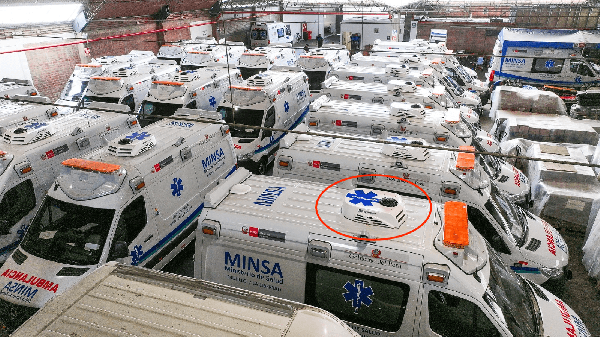
Breaking Engine Dependency: Achieving Comprehensive Temperature Control Across All Scenarios
Traditional ambulance air conditioning systems typically rely on the vehicle's engine for power. While this design can adequately maintain cooling while the vehicle is in motion, its effectiveness diminishes significantly—or ceases entirely—during scenarios common at emergency scenes, such as idling, engine-off standby, or low-speed maneuvering. This results in a rapid rise in the temperature within the patient compartment. Such temperature fluctuations not only compromise patient comfort but may also disrupt the metabolic stability of patients suffering from trauma, burns, or heat-related illnesses, while simultaneously increasing operational fatigue among medical personnel.
The electric air conditioning technology introduced by Corunclima fundamentally resolves this inherent conflict. The system employs an independent electric-drive architecture, completely decoupled from the vehicle's main powertrain. This design ensures continuous and stable cooling output regardless of whether the ambulance is driving, waiting, or completely shut down. This capability allows the patient compartment to consistently maintain an optimal temperature range, thereby creating a predictable and controlled clinical micro-environment for both on-scene initial treatment and long-distance patient transport.
Optimized for Medical Settings: Low Noise and Airflow Management
The design of this electric air conditioning system fully accounts for the unique requirements of medical operations. Low-noise operation is a critical performance metric; within the confines of a patient compartment, excessive noise from fans or compressors can interfere with the auscultation of heart and breath sounds, hinder the clear transmission of verbal commands among the medical team, and exacerbate psychological distress for conscious patients. By optimizing its compressor and fan control strategies, the Corunclima system keeps operational noise levels to a minimum, ensuring that emergency responders can maintain their focus and execute procedures in a relatively quiet environment.
Furthermore, the system features a uniform airflow distribution design that prevents cold air from blowing directly onto patients or critical medical equipment areas, thereby mitigating discomfort and potential risks associated with sudden, localized drops in temperature. The compact structural profile of the air conditioning unit allows for flexible installation—whether on the vehicle roof or in other designated spaces—without encroaching upon the already limited operational space required for emergency medical procedures. Furthermore, this design facilitates easy adaptation and integration with ambulance chassis of various brands and dimensions.
Reducing Fleet Operating Costs and Energy Burdens
From the perspective of emergency fleet managers, the benefits offered by electric air conditioning systems extend far beyond mere performance enhancements. Since cooling operations no longer rely on engine idling, vehicles can be completely shut down while stationary, thereby significantly reducing fuel consumption and exhaust emissions. In the long run, the reduction in engine idling time helps mitigate carbon buildup, slow down lubricant degradation, and minimize wear on critical components, ultimately lowering maintenance frequency and total lifecycle maintenance costs.
As global healthcare systems increasingly prioritize operational efficiency and environmental responsibility, electric auxiliary systems are becoming a key consideration in public procurement and fleet renewal processes. For fleets required to operate for extended periods in high-ambient-temperature environments, the cost savings and enhanced reliability provided by electric air conditioning hold particular practical significance.
A Versatile Platform for Diverse Specialized Vehicles
Corunclima’s technical solutions are characterized by their robust scalability. In addition to standard ambulance models, this electric air conditioning system is equally well-suited for mobile intensive care units, epidemic prevention and testing vehicles, emergency surgical cabins, field medical support vehicles, and various other specialized commercial vehicles requiring a stable internal climate. The company offers modular configurations and customized engineering support tailored to client needs, taking into account varying climate zones, road conditions, and operational intensities.
Beyond the ambulance sector, this technology can be extended to other fields—such as refrigerated transport, emergency command and communication vehicles, and mobile laboratories—creating a comprehensive product matrix for climate control solutions across a wide spectrum of specialized transport scenarios.
Fortifying Technical Reliability and Global Adaptability
With engineering reliability and real-world performance as its core guiding principles, Corunclima continues to invest heavily in technical expertise within the fields of transport refrigeration, electric parking air conditioning, and specialized vehicle climate control. The company focuses not only on calibrating cooling efficiency but also—and crucially—on ensuring the system's durability and resilience under complex operating conditions involving high temperatures, high humidity, dust, and vibration. Through long-term collaborations with numerous global vehicle manufacturers and medical transport project partners, Corunclima’s products have been rigorously validated across a wide range of typical operational environments. As nations continue to increase their investment in pre-hospital emergency infrastructure, the standardization of ambulance equipment is on the rise; notably, air conditioning systems have gradually evolved from being mere "optional features" into fundamental technical specifications within procurement tenders. Corunclima will continue to leverage product iterations and the expansion of its overseas partnership network to provide efficient, energy-saving, and low-maintenance electric climate control solutions for emergency medical services across an ever-wider range of regions. The company firmly believes that reliable temperature management is not merely a means to enhance comfort during emergency response, but—more importantly—a critical element in ensuring the continuity of pre-hospital care and safeguarding patient safety.