
Cold Chain Logistics Ushers in a "Silent Revolution": Electric Van Refrigeration Unit Technology Accelerates Iteration
With the accelerated green transformation of global "last mile" delivery, dedicated refrigeration units for electric vans are becoming a technological high ground in the cold chain industry. Recently, from North America to Europe and then to the Chinese market, industry giants have successively launched innovative products and technologies aimed at solving the energy consumption, range, and temperature control accuracy issues on pure electric platforms, injecting new momentum into zero-carbon cold chain logistics.
Giants Compete: High-Efficiency Integration and Environmentally Friendly Refrigerants Become Mainstream
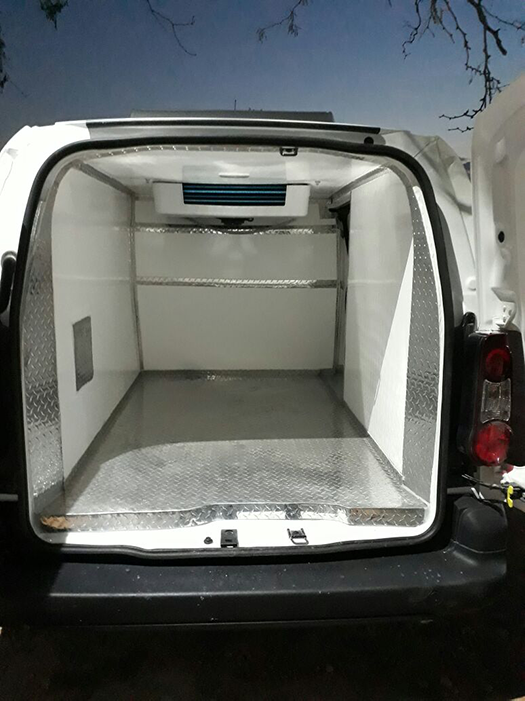
In the North American market, leaders in transportation temperature control are focusing on small electric delivery vehicles. Recently launched all-electric high-performance refrigeration units, designed specifically for small electric and fuel-powered delivery vehicles, belong to their all-electric refrigeration system family. The core technological highlight of this generation of units lies in their engine-less design. In pure electric vehicles, it is directly powered by the vehicle's battery; in traditional fuel vehicles, it operates through the vehicle's alternator and battery, ensuring constant temperature control for fresh and frozen goods regardless of engine speed.
To combat increasingly stringent urban noise pollution regulations, the compact design and electrified operation of the new generation of units make them exceptionally quiet. Their compressors are housed within the condenser assembly, rather than in the traditional engine compartment, significantly reducing refrigerant piping joints, lowering the risk of leaks, and reducing the required amount of refrigerant. Regarding environmentally friendly refrigerants, the industry is accelerating the adoption of alternatives with lower global warming potential, driving a green transition.
Similarly, another industry giant showcased its deeply integrated solution with OEMs. At a recent industry expo, several electric truck manufacturers exhibited fully electric trucks integrating all-electric transport refrigeration units. This deep integration allows the onboard computer in the cab to communicate directly with the refrigeration unit and receive power on demand. Industry experts point out that this electric power take-off unit operates seamlessly, requiring no manual adjustment by the driver, and because the electric compressor is unaffected by engine speed changes, it provides constant refrigeration capacity whether the vehicle is stationary or moving, ensuring cargo safety.
European Practice: Customized Upgrades to Meet Stringent Regulations
In Europe, the application of electric refrigeration technology has entered the practical stage. Several catering suppliers have recently deployed electrification-adaptive refrigeration units for their newly acquired electric truck fleets. Since entering operation, these vehicles have been specifically designed to meet the zero-emission delivery needs of urban centers and regions, both nighttime and daytime.
This collaboration highlights the importance of "adaptive upgrades." Because the latest electric truck platforms have specific requirements for power, safety, and technical parameters, refrigeration equipment manufacturers need to work closely with OEMs to upgrade their units, reducing power consumption and noise levels, and obtaining full OEM validation. Transportation companies generally emphasize that their priority is "achieving emission and noise reduction without sacrificing reliability or refrigeration capacity," and tailored solutions have given them full confidence in urban operations.
Technological Frontiers: Integration and Disruptive Innovation
Beyond the support of OEMs, technological breakthroughs by upstream core component manufacturers and Chinese domestic companies are reshaping the industry landscape. A leading domestic commercial vehicle manufacturer recently launched a refrigerated truck brand, emphasizing integrated innovation of chassis, refrigerated compartment, and refrigeration unit. Through advanced refrigeration systems, it achieves precise temperature control while optimizing energy consumption, actively responding to the national low-carbon direction for cold chain logistics.
On a more disruptive technological level, a major auto parts manufacturer recently announced that its oil-free foil bearing centrifugal compressor technology has secured its first mass production project designation in the Chinese market, to be applied to next-generation electric bus and truck air conditioning systems. This technology raises motor speeds to unprecedented levels, significantly reducing size and weight compared to traditional scroll compressors, while also significantly lowering noise. This high-pressure, oil-free, and maintenance-free design will set a new benchmark for thermal management in future electric trucks.
Furthermore, domestic companies are also providing another technological path for new energy logistics vehicles—cold storage retrofitting. In projects serving urban fresh food delivery, this technology uses a "replaceable cold storage unit + forced convection" approach, eliminating the need for compressor cooling while the vehicle is in motion. This effectively extends the driving range and achieves long-term insulation, providing a new energy-saving option for urban cold chain delivery.
Market Outlook
With the global market demand for electric truck refrigeration units continuing to rise, electric van refrigeration units are undergoing a profound technological iteration, evolving from simple "electrification replacement" to today's "deep integration and high efficiency." Whether it's improving performance through low-GWP refrigerants and integrated design, or reconstructing compressors with disruptive physics principles, they all point to the same future: cold chain logistics will become smarter, quieter, and more efficient on the basis of zero emissions.