
All-Electric Truck Refrigeration Units Accelerate the Green Transformation of Cold Chain Logistics
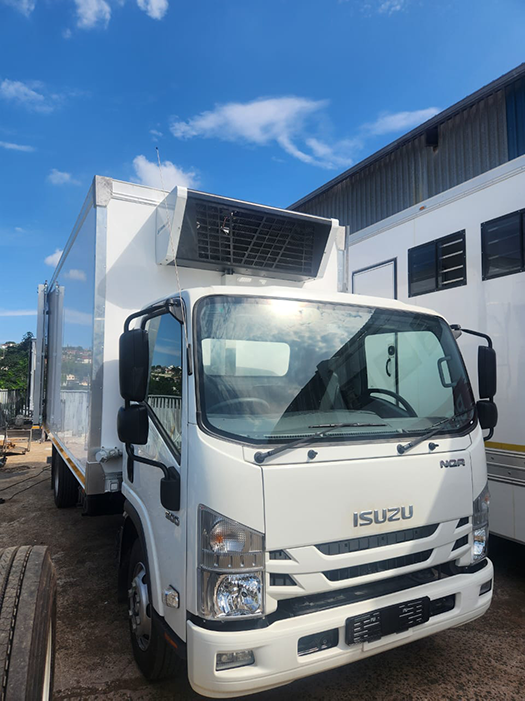
Technological Leap: Ditching Diesel Auxiliary Engines for Pure Electric Drive
Against the backdrop of deepening carbon reduction goals, the cold chain logistics industry is undergoing a power revolution centered on electrification. As a key component of refrigerated transport, all-electric truck refrigeration units are gradually replacing traditional diesel-driven systems, becoming the standard choice for new-energy refrigerated trucks. For a long time, conventional refrigerated trucks have relied on independent diesel engines to power the refrigeration unit, which not only consume large amounts of fuel and incur high maintenance costs, but also face increasingly stringent emission restrictions and road-access limitations in urban delivery scenarios. In contrast, all-electric refrigeration units draw power directly from the truck’s traction battery, completely eliminating the need for a diesel auxiliary engine and achieving zero tailpipe emissions during both driving and refrigeration. This makes refrigerated trucks far more environmentally friendly when operating in sensitive areas such as city centers and hospital districts, while also granting operators more favorable road-access rights.
Efficiency Breakthrough: Intelligent Temperature Control and Rapid Pre-cooling
The technological progress of all-electric refrigeration units is reflected not only in the switch of power source but also in major advances in energy efficiency and temperature precision. Next-generation units generally adopt high-efficiency inverter compressors and intelligent temperature-control algorithms, which dynamically adjust cooling power based on real-time factors such as cargo load, ambient temperature, and door-open frequency. This effectively avoids the energy waste common with traditional fixed-speed units that frequently cycle on and off. Even in hot summer conditions or on long-haul routes, the entire system maintains extremely tight temperature fluctuations, fully meeting the strict requirements of diverse cargo—from frozen meats to fresh produce, pharmaceuticals to e-commerce groceries. In addition, the introduction of multi-source heat pump technology allows the refrigeration unit to maintain efficient heating or defrosting capability in low-temperature winter conditions without relying on electric heating elements, further reducing overall vehicle energy consumption.
Vehicle Integration: Holistic Design and Intelligent Management
From a vehicle integration perspective, all-electric refrigeration units are moving toward deep synergy with the truck’s chassis, battery, and electric drive system. New-generation all-electric refrigerated trucks typically adopt a ground-up development approach, where key components such as the power battery, electric axle, and electric refrigeration unit achieve energy coupling and thermal management coordination. During driving, the battery distributes power on-demand to both the traction and refrigeration systems. While parked for loading or unloading, the refrigeration unit can switch to a low-power holding mode to maintain the cargo box temperature. The proliferation of intelligent connectivity enables fleet managers to remotely monitor the operating status, real-time temperature curves, and fault warnings of every refrigeration unit via an onboard IoT platform. This brings full visibility, traceability, and control to the cold chain process, eliminating the past pain point of not knowing what temperature a shipment experienced.
Policy Support: Green Logistics Becoming the Mainstream Choice
The guiding role of policy in the new-energy refrigerated truck sector is equally significant. In recent years, national and local governments have successively introduced incentive measures for scrapping and replacing old diesel trucks, along with clear purchase support and road-access priority for new-energy urban delivery refrigerated vehicles. Although specific rules vary by region, “green logistics” has become an irreversible policy direction. More and more logistics companies recognize that early deployment of all-electric refrigerated fleets is not only a way to fulfill social responsibility, but also a strategic choice to reduce long-term operating costs and hedge against future emission-regulation risks. All-electric truck refrigeration units are no longer a niche experiment—they are a mature solution for large-scale application.
Future Outlook: A Quiet, Clean Cold Chain Ecosystem
Looking ahead, as battery energy density continues to improve, fast-charging networks expand, and the manufacturing cost of all-electric refrigeration units steadily declines, the lifecycle economics of new-energy refrigerated trucks will become even more compelling. All-electric cold chain solutions are reshaping the entire fresh-food supply chain, from pre-cooling at the farm gate to high-frequency last-mile delivery in cities. It is foreseeable that in the near future, zero-emission refrigerated trucks moving quietly through streets and alleys will become one of the most vivid hallmarks of modern urban green logistics.