
Accelerating Green Cold Chains: Electric Light Commercial Vehicle Refrigeration Units Enter a New Phase of Technical Integration
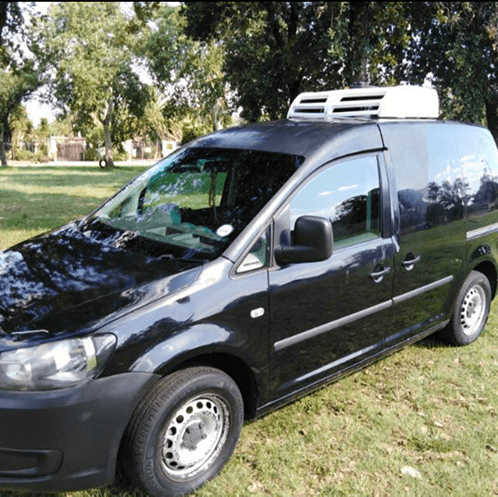
A Fundamental Shift in Drive Mechanisms: From Mechanical Dependence to Independent Electric Power
Amidst the accelerating transition of urban delivery systems toward new energy sources, the "last mile" of cold chain logistics is undergoing a systemic transformation—spanning everything from powertrain to chassis, and from hardware to control systems. As a core ancillary component for electric light commercial vehicles (LCVs), the technical trajectory of refrigeration units is gradually breaking free from its reliance on traditional mechanical drives, evolving deeply toward pure-electric propulsion, vehicle-system integration, and intelligent control.
With urban restrictions on fuel-powered trucks becoming increasingly stringent—and driven by the sustained growth in demand from fresh-food e-commerce, community retail, and on-demand pharmaceutical delivery services—electric LCVs have emerged as the mainstay of urban cold chain distribution, thanks to their operational flexibility and economic efficiency. Consequently, the refrigeration units designed to complement these vehicles now face technical requirements that differ starkly from those of the traditional fuel-powered era. In the past, refrigeration equipment typically relied on the power take-off (PTO) from a fuel vehicle's engine; when applied directly to electric chassis, however, this approach exposed practical issues such as difficulties in power matching, excessive energy consumption, and elevated operational noise levels. The industry, therefore, urgently requires a solution fundamentally reconstructed from the ground up.
Currently, the core direction of technological upgrading lies in a fundamental transformation of the drive mechanism. The large-scale adoption of full DC inverter technology and high-voltage electric compressors has enabled refrigeration units to achieve a complete decoupling from the vehicle's driving status. Whether the vehicle is navigating stop-and-go traffic in congested areas or sitting stationary while parked, the refrigeration unit can independently maintain a stable cooling output. This shift not only eliminates the energy losses inherent in traditional mechanical transmissions but also renders temperature control within the cargo compartment more precise and responsive, thereby providing a reliable temperature-controlled environment for high-value cold chain cargo.
A New Paradigm in Vehicle-Energy Synergy: From Energy Burden to Intelligent Dispatch
In terms of energy management, the new generation of refrigeration units is evolving from mere single-function cooling devices into intelligent execution units deeply integrated with the vehicle's overall electronic control system. Through coordinated control with the vehicle's powertrain, these units can monitor driving conditions, remaining battery capacity, and cooling demand in real time, dynamically adjusting their operational power output accordingly. In high-power output scenarios—such as vehicle startup, acceleration, or hill climbing—the refrigeration unit moderately reduces its cooling load to prioritize driving energy consumption. Conversely, during periods of stationary charging or low-speed driving, the system can fully accumulate cooling capacity, utilizing external power sources or energy recovery systems to replenish energy. This vehicle-refrigeration coordination strategy effectively addresses a core concern among cold chain users: the extent to which refrigeration operations encroach upon driving range.
Dual Breakthroughs in Lightweighting and Noise Reduction: Adapting to Complex Urban Delivery Scenari
Lightweighting and noise-reduction design represent equally critical dimensions in this latest round of technological iteration. Tailored to the specific characteristics of electric light commercial vehicles—namely their sensitivity to curb weight and compact chassis layouts—the new generation of refrigeration units widely adopts modular integrated designs and novel materials. This approach simultaneously reduces the unit's own weight while enhancing space utilization efficiency. Furthermore, by completely eliminating the internal combustion engine-driven power unit, operational noise has been drastically reduced. This enables cold chain delivery vehicles to operate during nighttime hours or within densely populated residential areas, thereby expanding the permissible operating window for urban delivery services and enhancing environmental friendliness within communities.
Upgraded Intelligent Control: Evolving from Hardware Devices to Transparent Terminals
The accelerating pace of digitalization ensures that refrigeration units are no longer confined to mere hardware-level performance enhancements. The comprehensive integration of Internet of Things (IoT) technology now enables the real-time uploading of unit operational data to a cloud-based management platform. Fleet managers can remotely monitor in-compartment temperature distribution, equipment operating status, and fault warning alerts, thereby achieving transparent, end-to-end control over the entire cold chain transportation process. This capability holds significant importance for establishing a fully traceable cold chain ecosystem and provides logistics enterprises with the technical support needed to navigate increasingly stringent regulatory compliance requirements.
A New Trend in Industry Synergy: Accelerating the Evolution Toward Core Standard Equipment
From the perspective of industry development trends, as the market penetration of new energy commercial vehicles continues to rise and urban cold chain delivery scenarios become increasingly specialized, refrigeration units for electric light commercial vehicles are transitioning from optional accessories to core standard components. Ongoing breakthroughs in heat pump technology, phase-change thermal storage materials, and integrated vehicle thermal management systems are expected to further push the boundaries of energy efficiency, thereby establishing a more robust technical foundation for the construction of a green urban cold chain logistics ecosystem. Driven by the dual imperatives of green logistics and high-quality development, the technological evolution of refrigeration units for electric light commercial vehicles is emerging as a pivotal lever for boosting cold chain delivery efficiency and reducing urban carbon emissions. It is foreseeable that, as collaborative innovation between vehicle manufacturers and refrigeration equipment suppliers continues to deepen, urban cold chain delivery will usher in a new generation of solutions—characterized by enhanced reliability, quiet operation, and efficiency—thereby providing even more robust logistical support for the high-quality lifestyles of urban residents.